


Eye-level on the Amazon
By Juliet Kinsman
Sustainability expert Juliet Kinsman finally makes it to the Peruvian Amazon on a river cruise and finds that aboard Delfín III, the greatest luxury isn’t the cabin or the caimans but the connection to community
“As Amazonians, we believe that everything holds a spark, a spirit, and that’s the essence of animism: the belief that every physical thing has a soul.” Juan Carlos Palomino
Four nights in, gazing out from the deck at the wide, wide river, I was still pinching myself that I was finally here, gliding along the Amazon. And I wondered what was giving me that butterflies-fluttering feeling in my stomach. It wasn’t the beautiful interiors that had me swooning the moment we stepped on board. It wasn’t even the feathery aguaje palms or the wildlife I’d always dreamed of seeing here. The greatest luxury of all was an invitation to spend time with the communities of this rainforest.

Even the boat makes the point. Delfín III’s interiors are organic, natural and beautiful: sustainably forested anacaspi wood, hand-woven fibre-matting ceilings, railings in geometric patterns inspired by Shipibo art. This is slow design that honours ancestral culture, not mass-produced fittings that could belong on any ship, anywhere.
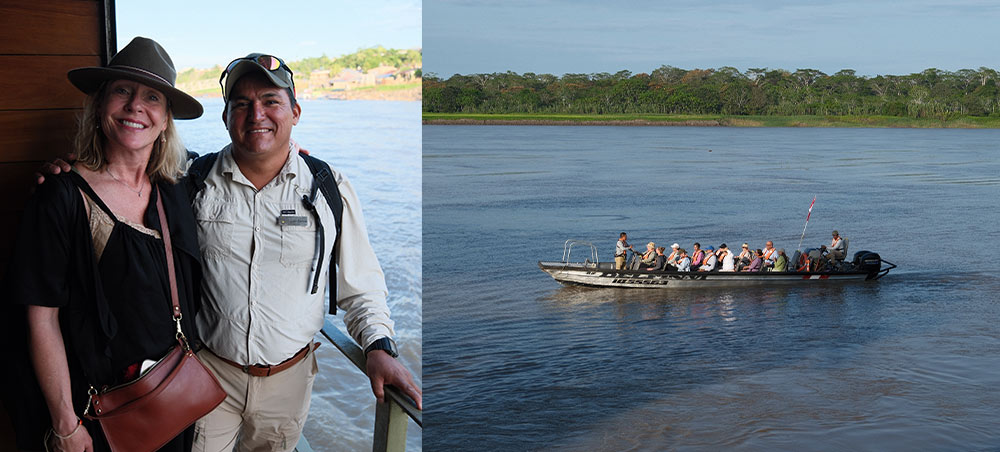
By day, skiff excursions treated us to palm-sized pygmy marmosets, side-eyeing caimans, pink river dolphins, squirrel monkeys. But it was Juan Carlos, one of the guides who comes from these very coordinates, who changed how I saw it all. As he explained how animism honours the spiritual essence of every non-human entity, from animals and plants to the river itself, we were gliding through that living scenery. The journey became one both within and beyond.
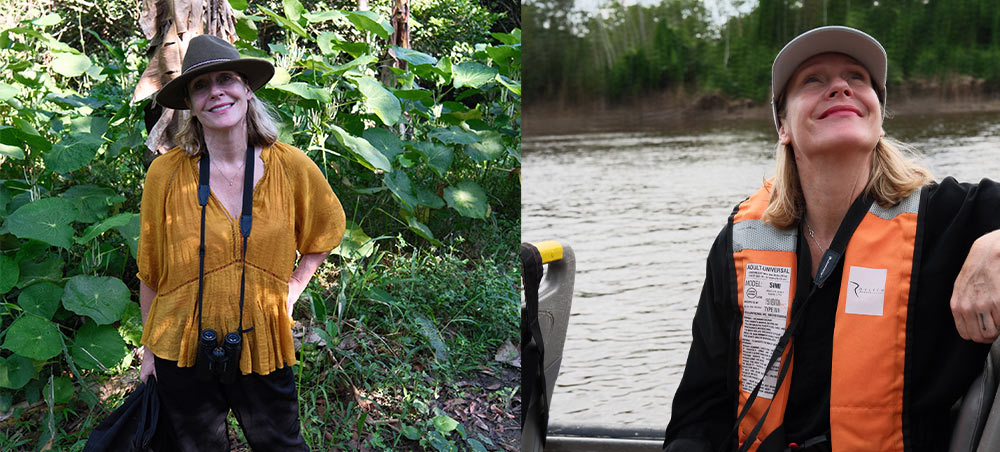
I’d dreamed of the Amazon since studying Social Anthropology, back when only 12 universities in the UK offered it as a degree. I’d wanted to be a journalist all my life, but specialising in sustainability didn’t yet exist. It wasn’t until 2020, when the world came to a standstill and we all paused to ponder how travel might have a more positive impact, that Condé Nast Traveller appointed me its first sustainability editor. I feel a huge responsibility for shining a light on travel experiences that genuinely do good for nature or communities. So it meant a lot to me that this was a 100% Peruvian-owned and -run river cruise.
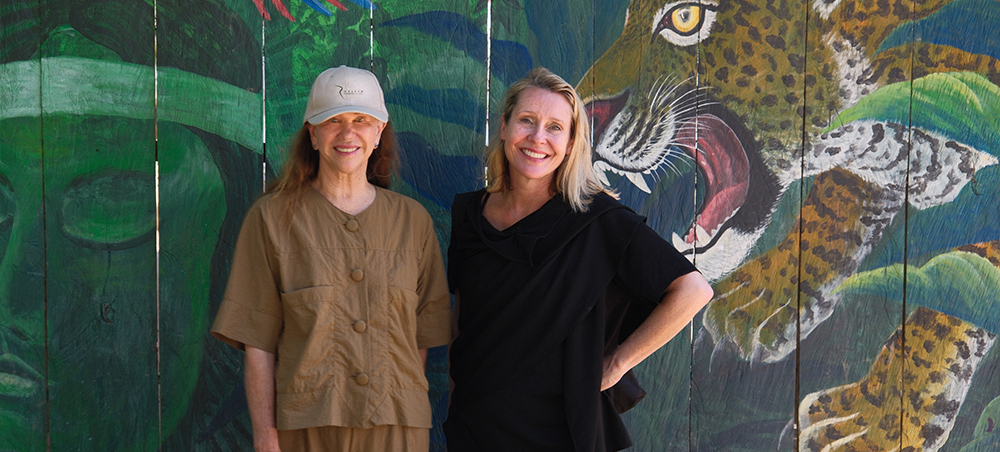
What separates this from other cruises is also what happens off the boat. Founders Lissy Urteaga and her husband Aldo Macchiavello launched their first vessel 20 years ago, and have spent every year since earning the trust of these communities. It’s moving to witness that trust firsthand. That connection between people and place is why Delfín’s biocultural restoration programme, developed with local communities, matters so much to this sustainability-seeking anthropologist.
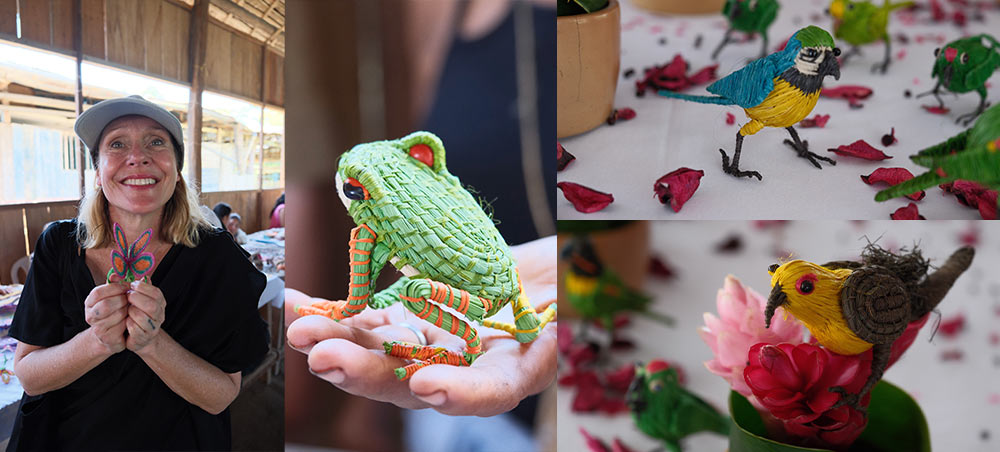
Our visit to Puerto Miguel brought that to life. The village is home to the Kukama-Kukamiria, a Tupian-speaking Indigenous people who fish, farm and draw vital income from small-group visits by Delfín’s passengers. This was no token-gesture souvenir stop-off. Lissy personally helped the village create a marketplace so they could sell their handicrafts properly. In their palm-thatched stilted houses, hours of painstaking work go into pieces like the naturally hand-dyed palm-fibre napkin rings I bought for a few soles. They are the most precious kind of sustainable souvenir, born of an exchange that felt like mutual gratitude rather than a market transaction. Honestly, the mutual love and affection was palpable.
As we wended our way through these waters, stopping to meet Ribereño communities, I didn’t need an academic to tell me how much Delfín’s support meant. We could feel it. This is Indigenous-positive, nature-respecting travel at its finest. I wouldn’t say that lightly. I exist to celebrate sustainable luxury that is sensitive to the people and places it brings travellers to.
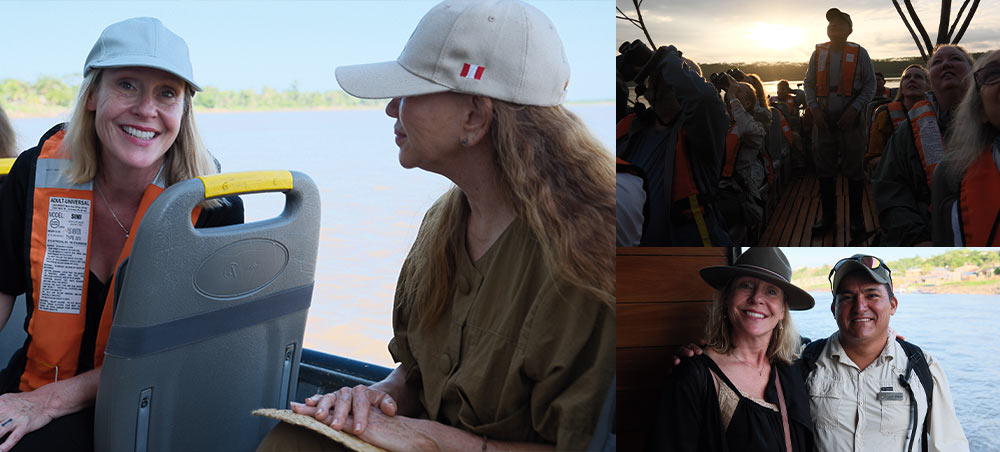
The sense of how much a culture built on oral history depends on being preserved has stayed with me since. This was a precious chance to actually meet a place and its people at eye level, as I always describe it: not to observe “locals” from a deck like part of the landscape, but to make a true human connection.
Juliet Kinsman is a travel journalist, the author of The Green Edit: Travel and the first Sustainability Editor of Condé Nast Traveller. She travelled with Aracari, which has been creating intentional itineraries in Peru since 1996. Follow Juliet on Instagram: @julietkinsman