


In Minor Keys: Sara Flores and the Politics of Listening
The 61st Venice Biennale opens this Saturday. A curator who sadly didn’t live to see the moment chose its title. Koyo Kouoh, a Cameroonian curator, conceived the title In Minor Keys. She made history as the first African woman to direct the Biennale. She had submitted her plans to La Biennale on April 8, 2025, but unfortunately passed away on May 10 at the age of 57. Despite her passing, her team will still bring the exhibition to life, exactly as she designed it.
111 artists and the art of quieter frequencies
The show will feature 111 artists, many of whom are from the Global South, and will focus on Kouoh’s vision of refusing spectacle and instead embracing quieter frequencies. This approach is a reflection of her unique perspective and insistence on creating a more subdued and thoughtful experience. The exhibition promises to be a powerful tribute to Kouoh’s legacy and a celebration of the diverse voices and perspectives that she brought to the table. With its emphasis on quieter frequencies, the show is likely to be a refreshing change of pace from the usual spectacle of the Biennale, and will hopefully inspire visitors to think more deeply about the art and the world around them.
The politics of voice and visibility
It’s time to stop being shocked by terrible things and start paying attention to the quiet voices, the soft whispers, and the gentle hum of life.We need to find the safe spaces, the havens, that protect all living things with respect and care. Her absence in Venice hasn’t toned down the message of the exhibition. If anything, it makes the message clearer. “In Minor Keys” asks who actually speaks when the global art world runs at its normal level. Kouoh created the show to push back against that. She’s making a point about the usual voices that get amplified, and how that leaves out a lot of other important perspectives. By doing things her way, Kouoh is refusing to play by the usual rules of the art world, and that’s what makes this exhibition so significant. It’s not just about the art itself. It’s about the politics of voice and visibility.
A new edition, new pavilions, new tensions
A significant argument and the conditions of the national pavilion system shape the 2026 edition. This year, seven countries are taking part for the first time: Guinea, Equatorial Guinea, Nauru, Qatar, Sierra Leone, Somalia, and Vietnam. El Salvador is also showcasing its own pavilion for the first time.
The US pavilion and the politics of representation
A federal directive requiring the art to promote “American values” affects the US pavilion, adding a layer of complexity. The international jury, in their opening statement, recognized the intricate relationship between artistic practice and nation-state representation. They stated that it “binds artists’ work with the actions of the state they represent.”
With this in mind, several pavilions are going beyond just exhibiting their work. They are redefining the terms of representation itself. This approach allows them to challenge existing norms and create a new narrative, one that is more nuanced and thought-provoking. These pavilions are not only showcasing their art but also sparking important conversations about the role of art in representing a nation and its values.
Peru’s pavilion is one of them
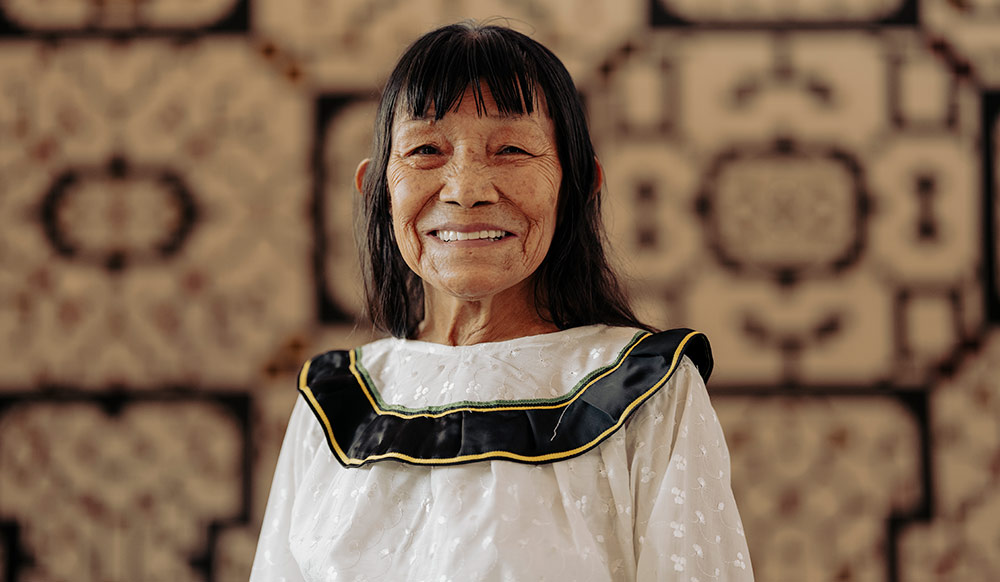
For the first time, Peru has an Indigenous artist representing the country. Sara Flores, born in 1950 and from the Shipibo-Konibo community, will showcase her work at the Arsenale. She has spent decades creating large paintings on raw cotton, sculptures covered in painted gauze, and a film called Non Nete, which means “A Flag for the Shipibo Nation”.
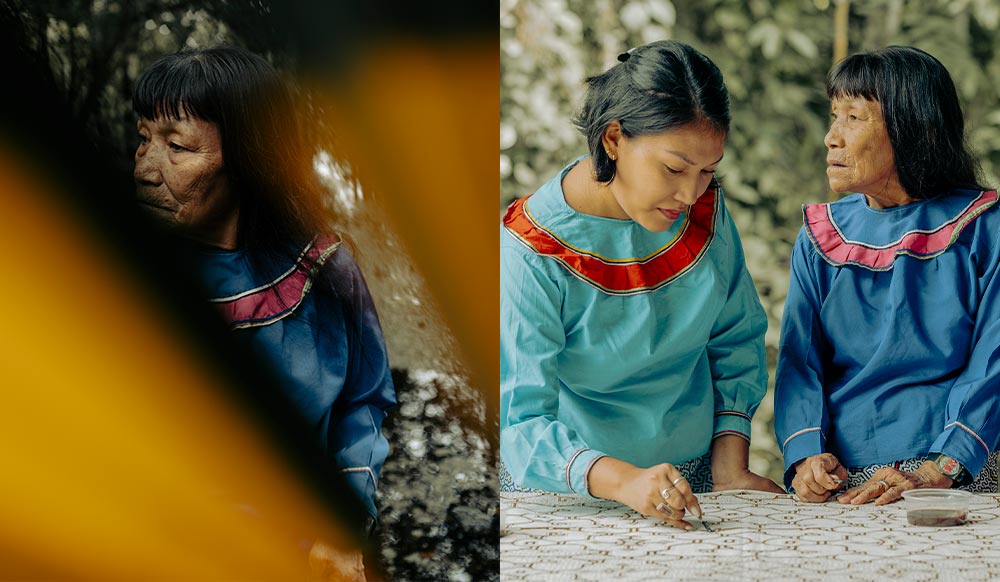
Curators Issela Ccoyllo and Matteo Norzi put together the exhibit De otros mundos, or “From Other Worlds”. Norzi also serves as executive director of the Shipibo Conibo Center in New York. The Patronato Cultural del Perú and ICPNA commissioned the pavilion. Sara Flores is based in Yarinacocha, and her work blends traditional and modern styles.
The pavilion is a great opportunity for people to learn about the Shipibo-Konibo culture and see the amazing work of this talented artist. Sara Flores helps promote Indigenous art and culture, and gives people a glimpse into her community’s rich heritage. Anyone interested in other worlds and cultures must see this exhibit.
Sara Flores: identity beyond country
Flores views her presence in Venice as being about her own identity, rather than just representing a country. She has talked about how the flag of Peru came to be, saying a dream inspired it. For the Shipibo people, we have our own dream too – the dream of being able to make our own decisions as an Indigenous nation. When it comes to the market that’s all around the Biennale, Flores is pretty straightforward: kené, our traditional designs, have been around forever and will keep on existing, no matter what the market does.
Kené: a visual language as a map of the universe
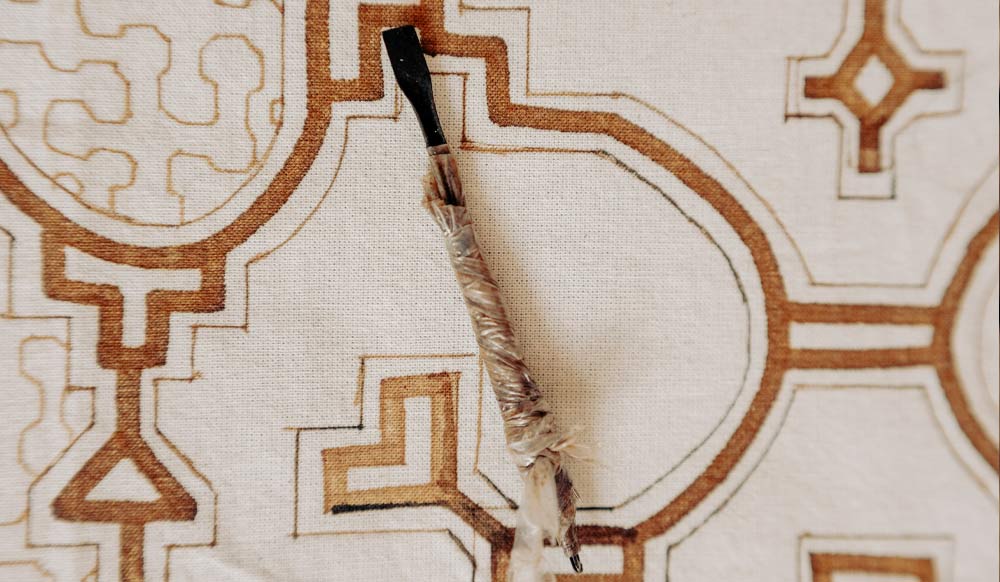
At the heart of this project is kené, a unique visual language from the Shipibo-Konibo people. Artists create it using natural pigments from plants and clay from rivers. Mothers traditionally pass it down to their daughters. The intricate lines in kené can be seen as a kind of map, connecting the body, plants, water, and the universe. It’s an incredibly complex and abstract system, one of the most advanced in the Americas. When you see kené on a large scale, like at the Arsenale, you’re witnessing a complete system of knowledge, governance, and spirituality, presented in its full form, without any interpretation or translation.
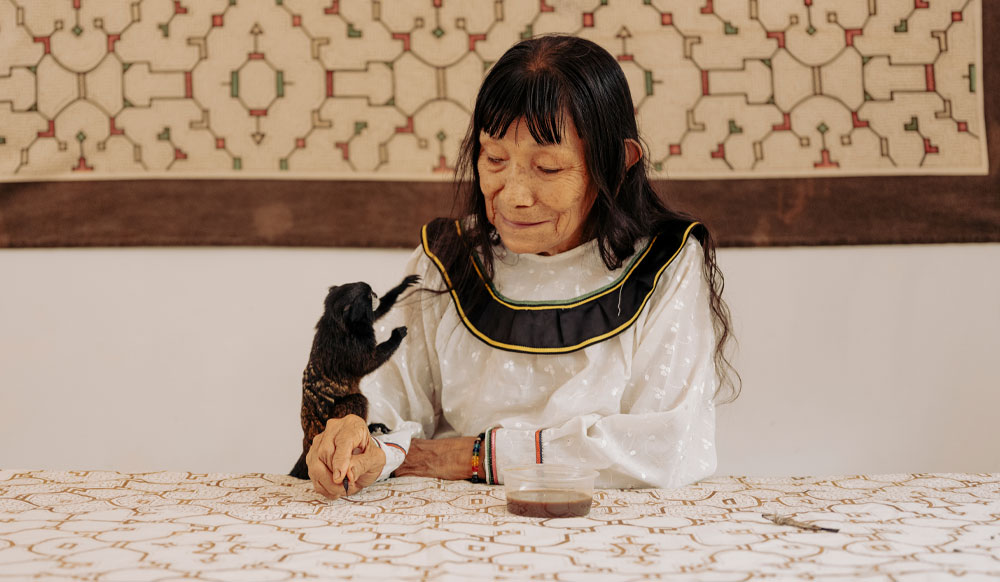
The pavilion fits perfectly into Kouoh’s framework, as if it always belonged there. Mothers have passed this tradition down to their daughters, expressing a sense of nationhood through art and fabric, rather than just words. The pavilion doesn’t change to fit in with the Biennale’s style. Instead, the Biennale has created a space that finally welcomes it.
This year, the Biennale has found a language that includes the pavilion, giving it the room it needs to shine. The pavilion’s presence is a statement, a visual representation of a nation’s identity, and it’s beautiful. The pavilion always belonged in the Biennale, and now it finally has the chance to show itself off. The Biennale’s new idiom is a breath of fresh air, allowing the pavilion to express itself in a way that feels authentic and true.

De otros mundos: a forest you can walk into
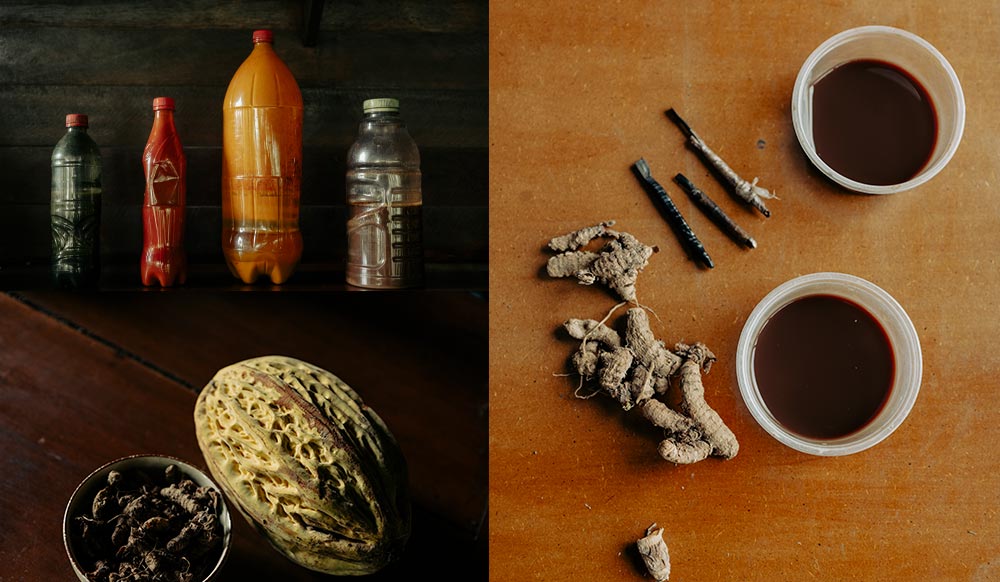
Flores has just created the biggest painting of her life for De otros mundos. It took her four whole months to finish, working on it nonstop. Some of her pieces are so big they’re like walking into a forest – they totally surround you.
Yarinacocha sits on the upper Ucayali, the same river system Delfín navigates downstream in Pacaya-Samiria. The Shipibo-Konibo are among the river cultures whose knowledge has shaped what the Amazon means in the contemporary imagination, and whose artistic practice has, until now, been read mostly through the lens of ethnography rather than contemporary art. The Biennale changes that frame.
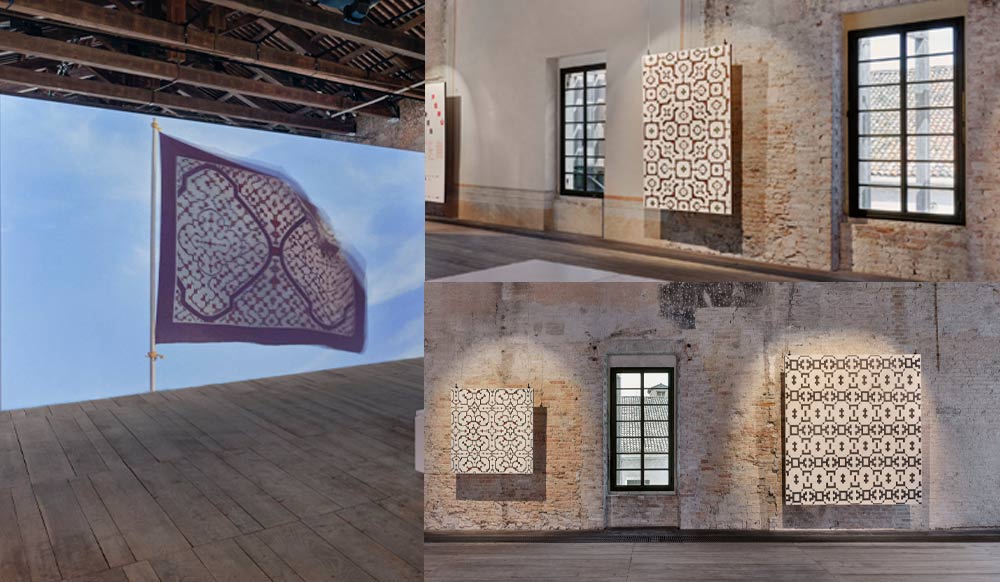
What Sara Flores brings to Venice is the Amazon thinking out loud, in its own grammar. This year, the Biennale has the ear for it.
The exhibit “De otros mundos” will be on display at the Arsenale from May 9 to November 22, 2026.
May 07, 2026
Photo Credits
Sara Flores, 2026
© Musuk Nolte,
Courtesy The Shipibo-Conibo Center, NY
White Cube
Sara Flores
From Other Worlds’, Peru Pavilion, 61st Venice Biennale
9 May 22 November 2026
© Sara Flores. Photo © White Cube (Eva Herzog)