


RÍO CORRIENTES: A DIFFERENT CURRENT
In Barranco, an ambitious initiative is creating a different kind of space for artists from the Amazon rainforest in Perú, one built around experimentation, exchange, agency and the development of lasting artistic careers.
There is something quietly radical happening on Avenida Almirante Grau in Barranco.
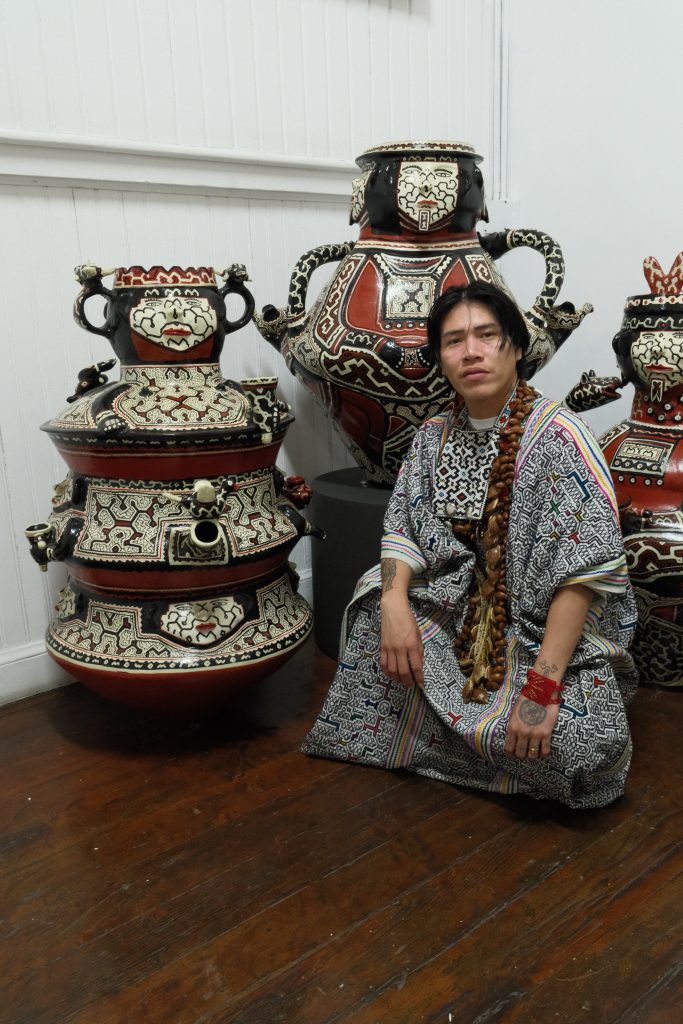
Río Corrientes is not quite a gallery, not quite a residency and not simply an artists’ studio. Conceived as a workshop, laboratory and meeting place for artists from the Peruvian Amazon, it is attempting something more structural: creating the conditions in which Amazonian artists can experiment, develop their practices and engage directly with curators, collectors, researchers and audiences.
The project is led by Iquitos-born artist, curator and cultural manager Christian Bendayán and art historian Leslie Tucno. It grew out of the work of BUFEO: Amazonía + Arte, an organization that has spent years researching, exhibiting and increasing the visibility of Amazonian art.
Río Corrientes addresses another, less glamorous question: What happens to artists after visibility arrives?

A space for amazonian artists
That question feels particularly urgent today. Amazonian and Indigenous art are receiving extraordinary international attention. But attention is not the same as infrastructure. Visibility alone does not guarantee sustainable careers or economic independence. Artists also need control over how their work circulates and how the market values it.
Río Corrientes treats the art market neither as a dirty word nor as the ultimate measure of artistic value. Artists learn how to price, present and circulate their work. This knowledge allows them to enter the market with greater confidence and agency.At the same time, the space encourages experimentation with materials, techniques and formats without demanding that artists conform to a fixed idea of what art from the Amazon rainforest in Peru should look like.
That distinction matters. The initiative is not interested in preserving artists inside an aesthetic category. It is interested in allowing them to move.
Artists who have passed through Río Corrientes have experimented with unfamiliar materials, new palettes and different processes while continuing to draw from their own visual languages and bodies of knowledge. The aim is not to make their work more contemporary. It already is contemporary. The aim is to give artists the space, tools, dialogue and connections they need to decide where their work can go next.

The meaning behind río corrientes
Even the initiative’s name carries this philosophy.
Río Corrientes pays homage to the late Iquitos artist and teacher Nancy Dantas and her 2007 work Río Corrientes, a powerful response to the environmental destruction associated with oil extraction in the Peruvian Amazon.
The reference anchors the initiative in a history in which art, territory, memory and political consciousness cannot easily be separated. It also evokes the rivers that sustain communities, ecosystems and cultural traditions throughout the Peru Amazon rainforest.
Its current exhibition makes those connections especially clear.
When the last fish is gone

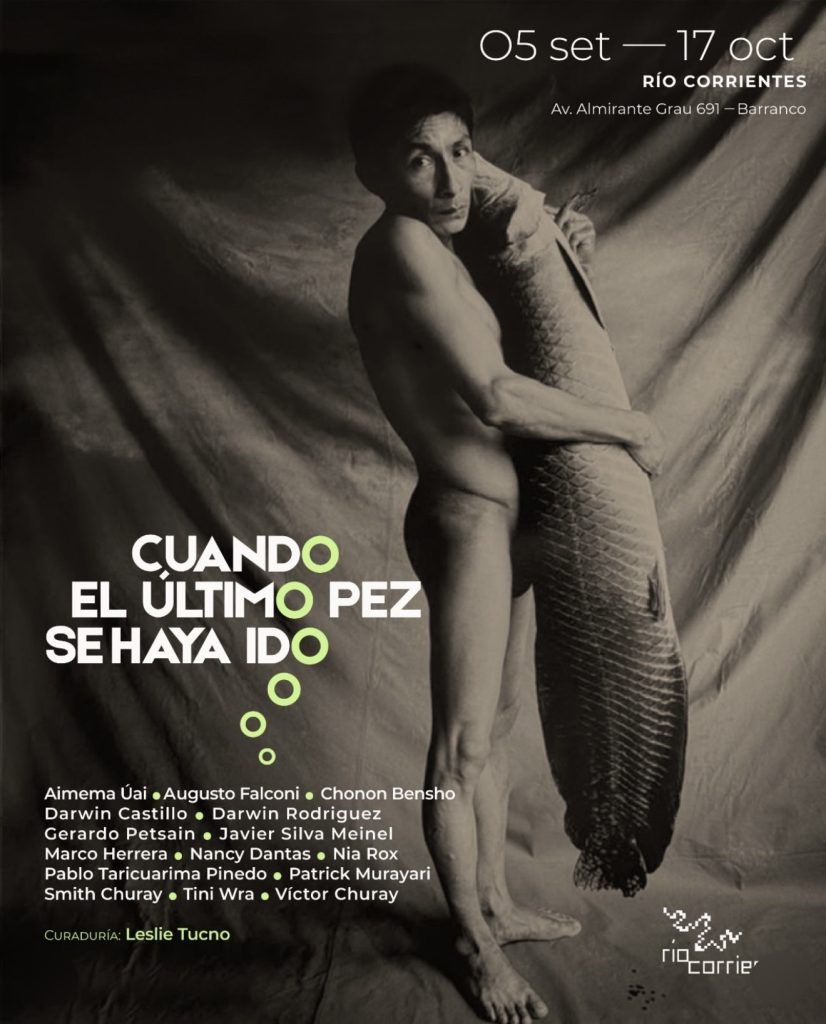
Cuando el último pez se haya ido, curated by Leslie Tucno, begins with food but quickly opens onto something much larger.
The exhibition brings together Aimema Úai, Augusto Falconi, Chonon Bensho, Darwin Castillo, Darwin Rodriguez, Gerardo Petsain, Javier Silva Meinel, Marco Herrera, Nancy Dantas, Nia Rox, Pablo Taricuarima Pinedo, Patrick Murayari, Smith Churay, Tini Wra and Víctor Churay.
Its central proposition is deceptively simple: When we look at food, how much of what made that food possible do we actually see?
A fish is never only a fish. Behind it is a river, a season, a territory, an ecosystem and accumulated knowledge about when and where to catch it. A crop carries the knowledge of planting and harvesting. Food can hold stories, rituals, family relationships, exchange and memory.
In the Amazon rainforest in Peru, these connections become particularly visible because knowledge has often been kept alive through practice. Knowing when to fish, where to hunt, what to plant or how to prepare something is not abstract information. It is knowledge embodied and transmitted through doing.
The exhibition asks what happens when those chains begin to break.
When a river is contaminated
September 08, 2026