


IQUITOS: BEFORE THE RIVER
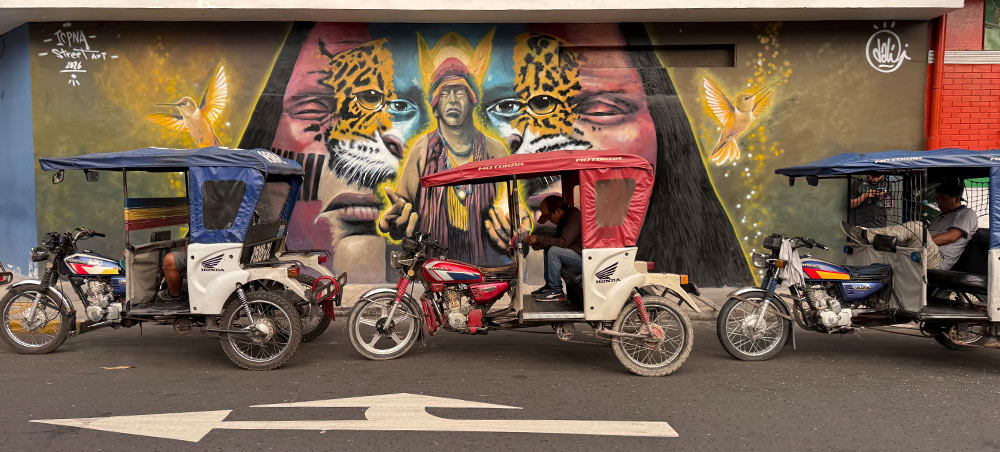
Before you see the river, you feel what it has made possible.
A city. Roofs and markets, kitchens and workshops, motorcycles negotiating an intersection with considerable confidence. People going to work in the heat. Fruit arriving from somewhere upstream. Meanwhile, a wooden bus carries another afternoon through the streets.
This is Iquitos. The Amazon already has an urban life.
An Amazon river cruise in Peru begins within this larger story. In fact, before boarding Delfín, there is a city whose food, buildings and daily rhythms carry the presence of water.
From the aircraft, the Amazon rainforest in Peru stretches toward the horizon, opened by great seams of river. Gradually, streets begin to appear. Roofs gather. A city takes shape within the green.
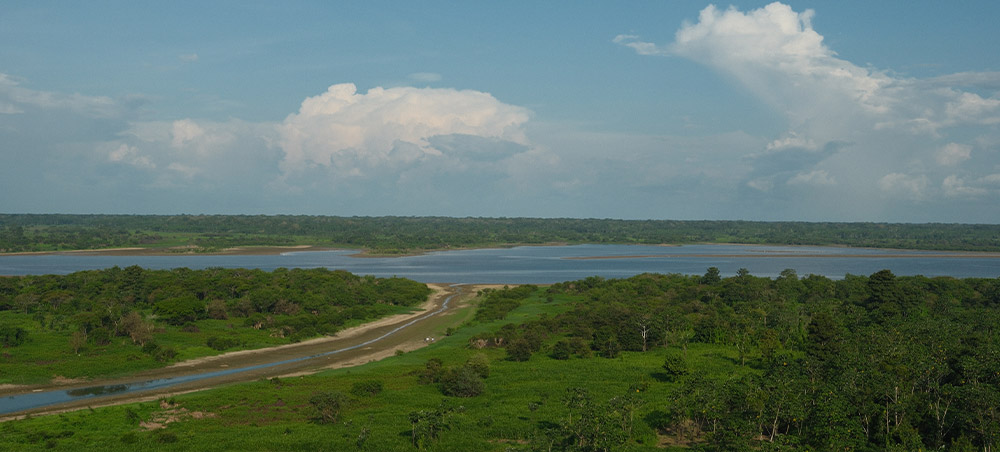
Yet no road connects Iquitos to Lima. Instead, the road to Nauta reaches another river port; it does not eventually deliver you across the Andes. Here, the familiar idea that every road must lead somewhere else quietly loses its authority.
The apparent isolation can be misleading. Iquitos has always had ways of reaching the world. They follow the water.
A river brings food, a relative, a shipment, news. It makes one place accessible and, with a change of season, alters the terms of arrival. Distance becomes a matter of currents and water levels, of the boat available and the time it takes. The map is only the beginning of the explanation.
An Amazonian city grows within those conditions. The forest enters its kitchens. The rivers organize its commerce. The heat influences how a window opens, how a body moves through the day.
The buses seem to understand where they are.
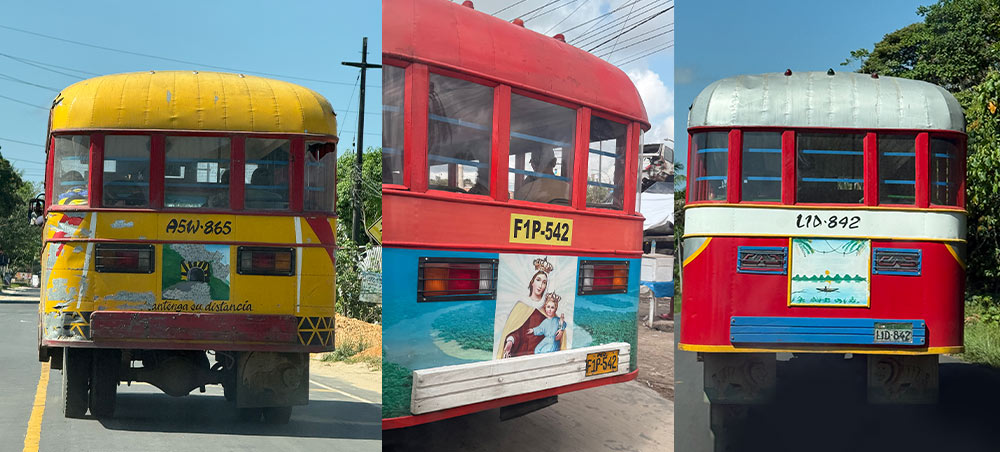
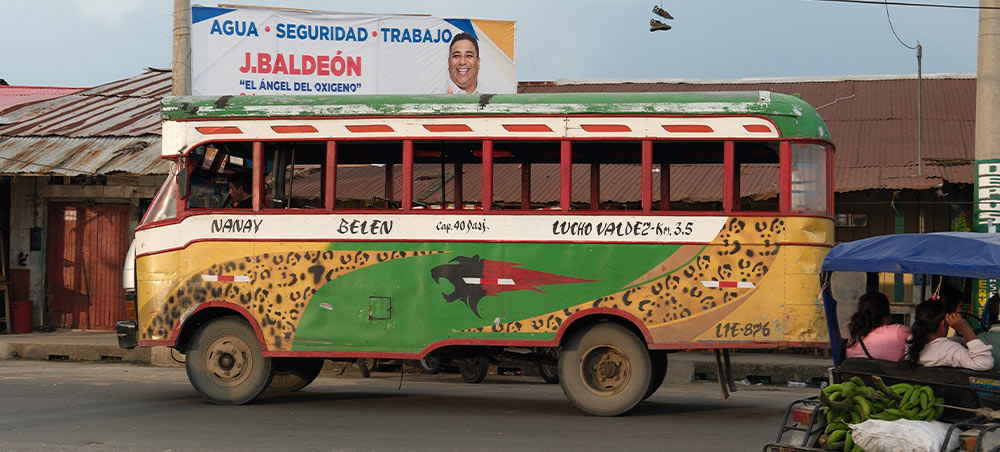
Wooden-bodied and brightly painted, they move through the traffic with a cheerful, almost folkloric presence. Their woodwork gives them the individuality of something made by hand. Amid the quick darting of motorcycles and motocarros, they carry passengers, daily errands and a generous amount of local character. These are working vehicles with rather more personality than public transport is usually allowed.

Iquitos survives in tile and iron.
During the época del caucho, the rubber boom of the late nineteenth and early twentieth centuries, the demands of distant industries reached deep into the forest. Rubber left by river. Fortunes accumulated. European materials and fashions arrived, and Iquitos acquired its own belle époque.
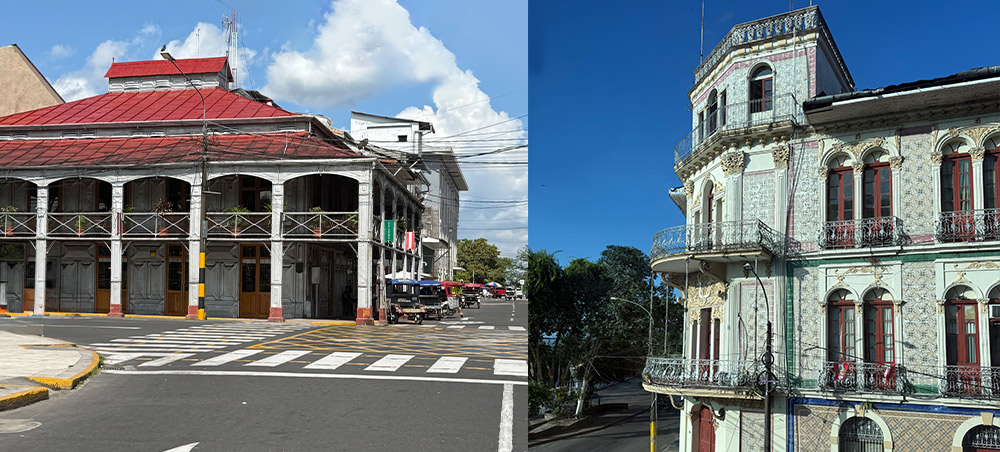
Ornamental façades, tiled walls and iron balconies gave that wealth a public face. Today, some remain, their elaborate details holding the ambitions of another age in the humid air. Moreover, there is something arresting about encountering such European flourishes here, so far from the cities whose tastes they borrowed.
The Casa de Fierro, the Iron House, carries the most persistent association: it is traditionally attributed to Gustave Eiffel, whose name belongs to the tower in Paris. However, the attribution is disputed, although the story has proved remarkably durable. The building itself needs little embellishment: a prefabricated European iron house transported into the Amazon is an extraordinary proposition all on its own.
Such architecture rewards a closer look. So does the history behind it.
Indeed, the rubber economy depended on the exploitation and enslavement of Indigenous people, with particularly brutal abuses in the Putumayo. Those elegant surfaces belong to a deeply painful history. Appreciating a place means making room for what its prettiest buildings cannot tell us by themselves.
Meanwhile, the everyday life of Iquitos tells another part of the story, especially around lunchtime.
A Culinary Experience
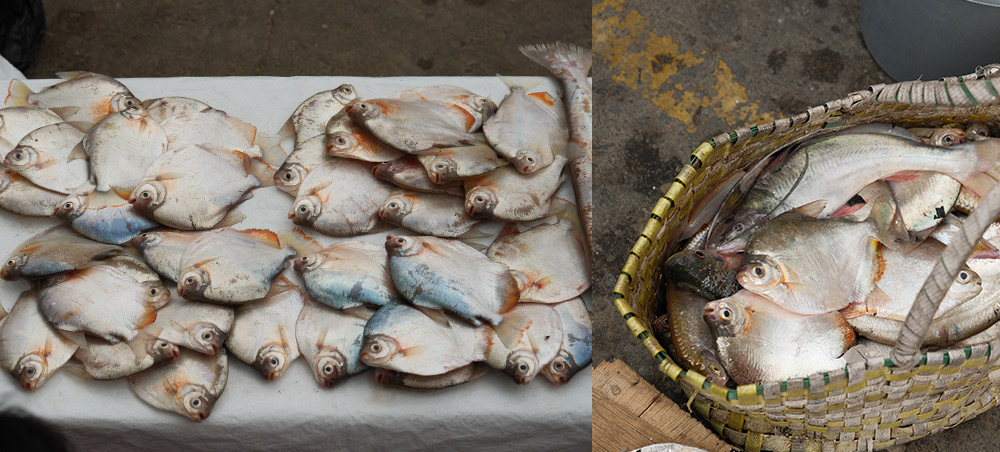
In Belén, the surrounding Amazon gathers on market stalls. A fishing ground becomes a row of fish. A forest garden becomes a mound of yuca. Long journeys by boat end in baskets, sacks and bundles of leaves. Each stall is a small point of connection to a much larger landscape.
Aguaje: An Iconic Fruit of the Peruvian Amazon
The fruit comes from palm wetlands called aguajales. Its pulp is eaten with salt, stirred into the cold sweetness of aguajina, or made into ice cream and frozen treats. In the afternoon heat, its appeal requires very little explanation.
Beyond its refreshing flavor, there is a whole economy in that cooling mouthful. Harvesters, boat operators, port workers and sellers have all played a part in bringing it from wetland to street corner. Aguaje offers a deliciously immediate understanding of how a city depends on the living world around it.
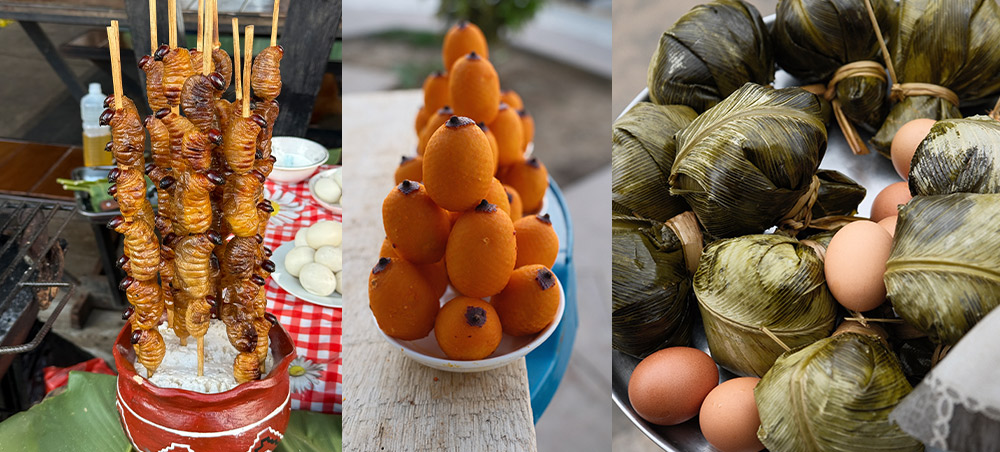
There are camu camu and cocona, plantains and yuca, food folded into bijao leaves. A juane opens from its green wrapping to become a meal. Leaves, fruit, fish and fire give the kitchen its own account of the landscape.
The fish have names worth lingering over: paiche, gamitana, boquichico, paco, doncella, sábalo, carachama. Together they suggest how much life a river keeps beneath its surface. On the table, that diversity becomes texture and flavor, broth and smoke, the crisp skin of a fried fish. The phrase “river fish” scarcely begins to cover it.
River-turtle eggs and lagarto, or caiman, also belong to the region’s history of eating from water and forest. Their presence in markets reveals a more complicated relationship, as inherited food traditions meet growing pressures on wildlife. Understanding that relationship takes curiosity and care. What a city eats tells us about its knowledge, its needs and the demands it places on its surroundings.
Understanding the place before entering the forest
To be an Amazonian city is to live within these relationships, every day.
The knowledge behind a meal, a boat journey or a house built around rising water reaches far beyond the streets. Indigenous peoples have inhabited, cultivated and understood this region for thousands of years. The name Iquitos itself recalls the Ikitu. That human presence continues in the Amazon’s languages, communities and everyday decisions.
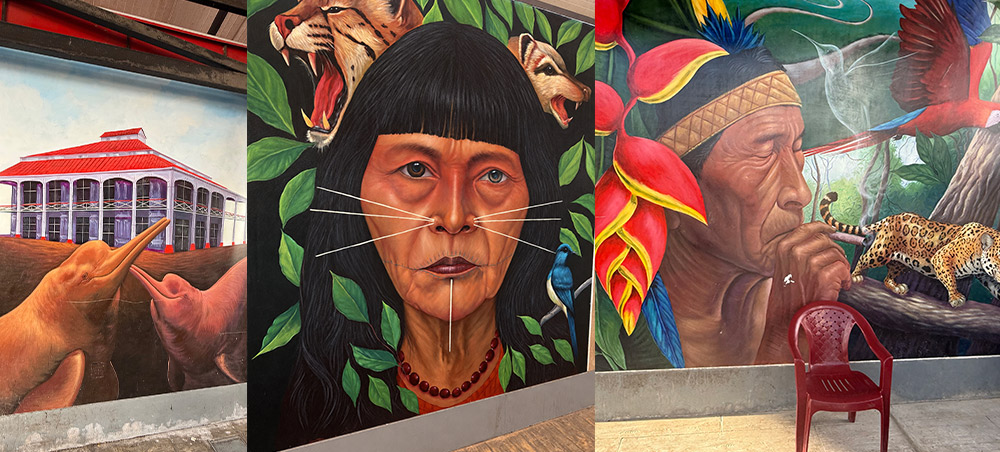
Perhaps this is the most valuable thing Iquitos offers at the beginning of a journey: a fuller sense of where we are.
The forest is already present in someone’s lunch. The river has brought the fruit to market. Histories both magnificent and terrible remain in the buildings. A wooden bus goes past, carrying the city onward.
By the time your Amazon river cruise with Delfín begins, the water ahead feels connected to everything you have already encountered.
You are already in the Amazon.
September 14, 2026