


FITZCARRALDO AND THE AMAZONIAN DREAM: FROM SPECTACLE TO LISTENING
How one of cinema’s most unforgettable Amazon stories still shapes the way travelers imagine the river, and why the journey today asks for something quieter, deeper, and more awake.
Some landscapes refuse to stay in the background.
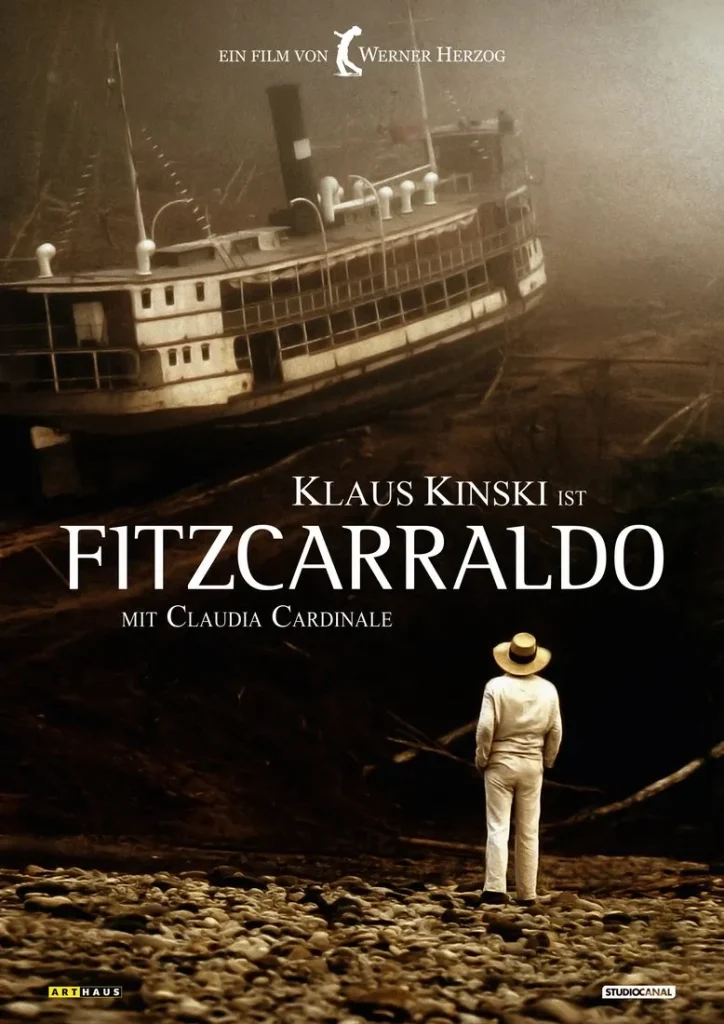
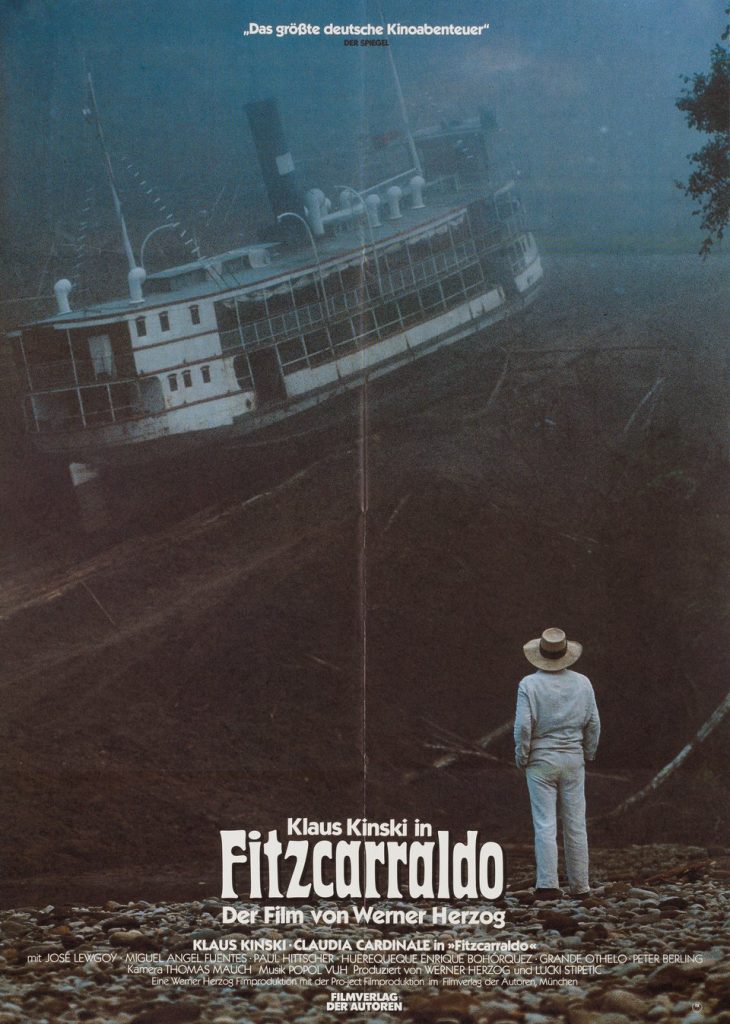
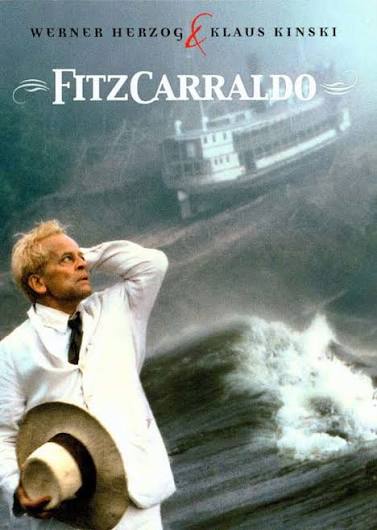
Werner Herzog’s Fitzcarraldo, released in 1982, is one of those films in which the Amazon becomes more than a setting. It is atmosphere, obstacle, seduction, myth, and force. For many travelers, it remains one of the images that first made the Peruvian Amazon feel vast, theatrical, and almost impossible to comprehend from afar.
The film follows Brian Sweeney Fitzgerald, known as Fitzcarraldo, an Irishman living in Iquitos at the height of the rubber-boom imagination. He is a dreamer, an obsessive, a believer in impossible gestures. His great ambition is to build an opera house in the jungle and bring the voice of Enrico Caruso to the Amazon.
To finance the dream, he turns to rubber. He buys a piece of land that seems almost unreachable because it is separated from a navigable river by a steep hill. His solution is outrageous: move a steamship over the mountain, from one river system to another.
That image, a boat dragged through the forest by rope, mud, sweat, and sheer will, has become one of the most unforgettable in cinema.
It also explains why Fitzcarraldo still lives in the imagination of travelers. The film endures because it suggests scale rather than offering explanation. It leaves us with the sense of a place where ordinary proportions collapse. Rivers behave like worlds. Ambition is tested by heat, distance, rain, and forest. Dream and madness begin to touch.
Herzog made the film with the same extremity that defines the story. The ship was real. The jungle was real. The act of moving the boat became real. That is why Fitzcarraldo still feels so charged. It is a film about obsession, and an obsessive act in itself.
THE AMAZON AS FANTASY
Long before most visitors arrive in Iquitos, the Amazon has already arrived in their imagination.
It comes through cinema, literature, expedition stories, maps, legends, childhood geography books, and the old idea of the jungle as a place at the edge of the known world. The Amazon has been pictured as paradise and danger, abundance and mystery, wilderness and dream. It has served as a backdrop for heroic journeys, colonial fantasies, lost cities, impossible fortunes, and personal reinvention.
That fantasy is powerful. It is also incomplete.
To return to Fitzcarraldo today is to see both its beauty and its contradictions more clearly. The film opens a door into a particular moment in Amazonian history, when Iquitos became one of the most improbable cultural crossroads in South America. Wealth arrived by river. European tastes travelled inland. Opera, imported tiles, grand houses, champagne, and pianos found their way into a world of heat, water, distance, and forest.
It was dazzling.
It was also brutal.
The same rubber boom that gave Iquitos its mythology was built on extraction, violence, and the exploitation of Indigenous communities. Outsiders too often saw the Amazon as a frontier, a source of endless wealth, a place where men could project ambition onto a landscape they barely understood.
That is the tension inside Fitzcarraldo. It captures the pull of the Amazon with extraordinary force, while carrying the weight of an older imagination: the Amazon as a place to conquer, perform upon, and bend to human desire.
Today, that idea feels old.
A DIFFERENT KIND OF AMAZON JOURNEY
The Amazon asks for another kind of traveler.
Less performance. More attention. Less conquest. More listening.
This is where an Amazon river cruise in Peru can become something very different from the old fantasy. A slow passage through a living world. A way of noticing what is already there.
A river shifting colour with the light.
A bird heard before it is seen.
A pink river dolphin breaking the surface and disappearing before anyone has time to reach for a camera.
A tree standing with the quiet authority of time.
A community whose knowledge of the forest comes from generations of relationship, rather than a few days of passing through.
The Amazon rainforest in Peru reveals itself slowly. It has rhythm, intelligence, weather, memory. It works through heat, rain, patience, silence, and surprise. To travel here well is to accept that we are guests inside a much larger story.
That may be the real transformation.

FROM SPECTACLE TO ATTENTION
We travel, often, because we want to be moved. Distance from the noise of everyday life allows us to reconnect with what matters most. Beauty, wonder, and perspective have a way of returning us to ourselves with greater clarity. In the Amazon, the journey is less about becoming someone new and more about becoming attentive. More awake. More aware of the living world and our place within it.
A luxury Amazon river cruise should bring us closer to the place itself. At its best, luxury here means access, care, knowledge, quiet, and time. The true privilege is moving slowly along the river with guides who understand the language of the forest. Before dawn, the Amazon is already awake. Birds call from the canopy and the river begins to stir. Comfort serves a deeper purpose: creating space to observe, reflect, and connect with the world around us.
In the Peruvian Amazon, the journey is not only about what you see. It is about how you learn to see.
THE CURIOSITY THAT REMAINS OURS
 THE CURIOSITY THAT REMAINS OURS
In an age of instant answers, the Amazon restores the value of a question.
A name, a route, a species, a translation; all of these can be found quickly now. Curiosity takes longer. It begins with a sound in the forest. A flicker of movement in the canopy. A ripple on the river. The feeling that something is present before it has been explained.
That remains ours.
In Fitzcarraldo, the dream was to bring opera into the jungle.
Perhaps the journey now is different.
To let the jungle change the way we listen.
To move from spectacle to attention. From ambition to care. From the old fantasy of the Amazon as elsewhere, to the more urgent understanding of the Amazon as one of the planet’s most vital living worlds.
The boat dragged over the mountain remains one of cinema’s great images of obsession.
But the journeys that matter now ask something quieter from us.
To enter slowly. To look closely. To listen before naming. To understand that transformation is not something we take from a place. It is what happens when a place alters the way we see.
June 15, 2026