


A remembering, and a responsibility
Earth Day was born in 1970. A call to attention. A moment to name what was already being lost, and to ask whether we were willing to change.It is observed around the world now, every April 22, still held by one essential question.
How are we choosing to live on this earth?
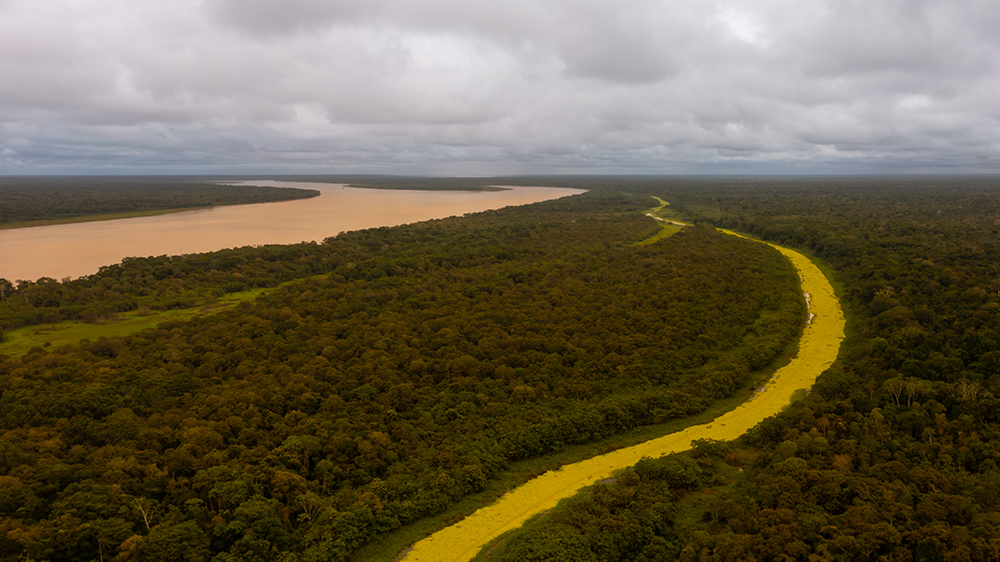
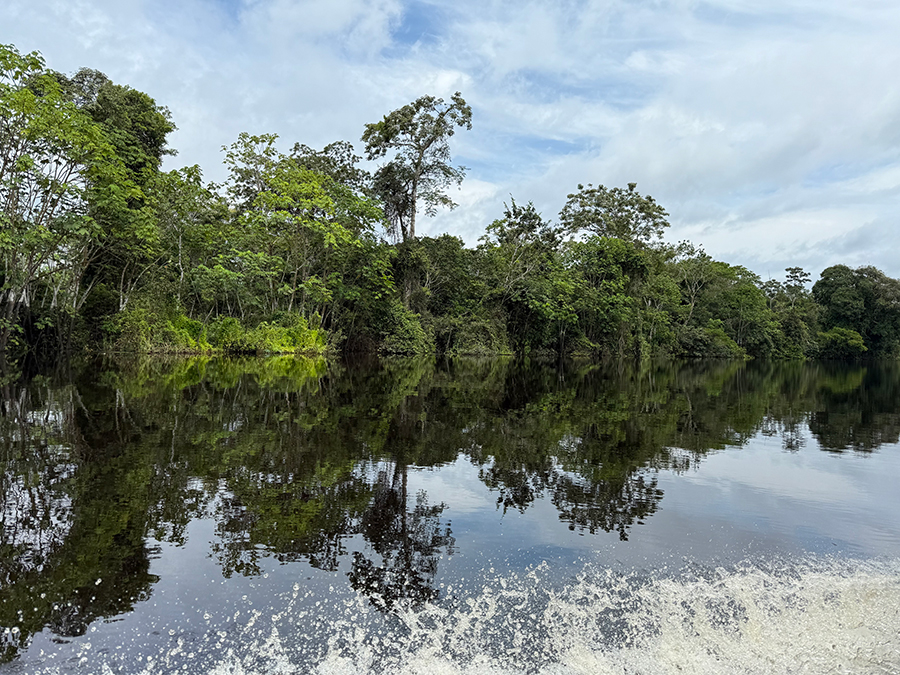
In the Amazon, that question does not stay abstract for long. Here, nothing exists alone. The river carries the forest’s reflection. The forest returns the river’s breath. Life is relationship: constant, intricate, and precise.
And yet travel holds a contradiction. It can open access to extraordinary beauty, and it can also place pressure on the very ecosystems it depends on. The Amazon is one of those places, a living system shaped by water, biodiversity, and the knowledge of communities who have inhabited its shores for generations.

To operate here requires a different approach.
Delfín Amazon Cruises was founded by Aldo Macchiavello and Lissy Urteaga, a family-owned, Peruvian company built with one clear purpose: to preserve the Amazon rainforest and the Pacaya Samiria National Reserve. Their presence here is protective by design. When a forest has economic stewards who benefit from its health, it stands.
Earth Month is a conversation we hold with care.
Below are the questions we are asked most often, answered with clarity, grounded in what we do, and shaped by what we are still building.
ON REGENERATIVE TRAVEL
What does regenerative travel actually mean?
It is the choice to leave a place more alive than you found it. It goes beyond reducing impact. It supports renewal in ecosystems and in communities, so the forest, the river, and the people who call it home are genuinely strengthened through the journey.
Delfín directly supports over 1,400 people across 14 communities. That is the documented result of nearly two decades of work: year-round income for artisans, jungle trails maintained by local guides, and healthcare campaigns that reach people with limited access to medical care.
How is it different from sustainable travel?
Sustainable travel often focuses on reduction, less waste, less extraction, a lower footprint. Regenerative travel asks deeper questions. What are we restoring? What are we supporting? What becomes healthier because we were here, and because we chose to travel with care?
ON BIOREST
What is BioRest?
BioRest is Delfín’s approach to biocultural restoration. Its foundation is simple: biodiversity and cultural continuity belong to the same living web.
BioRest is expressed through long-term, place-based actions that support ecosystems, ancestral knowledge, health, education, craft, and local livelihoods. It is woven into our operations, shaping the rhythm of every journey.
What does BioRest look like in practice?
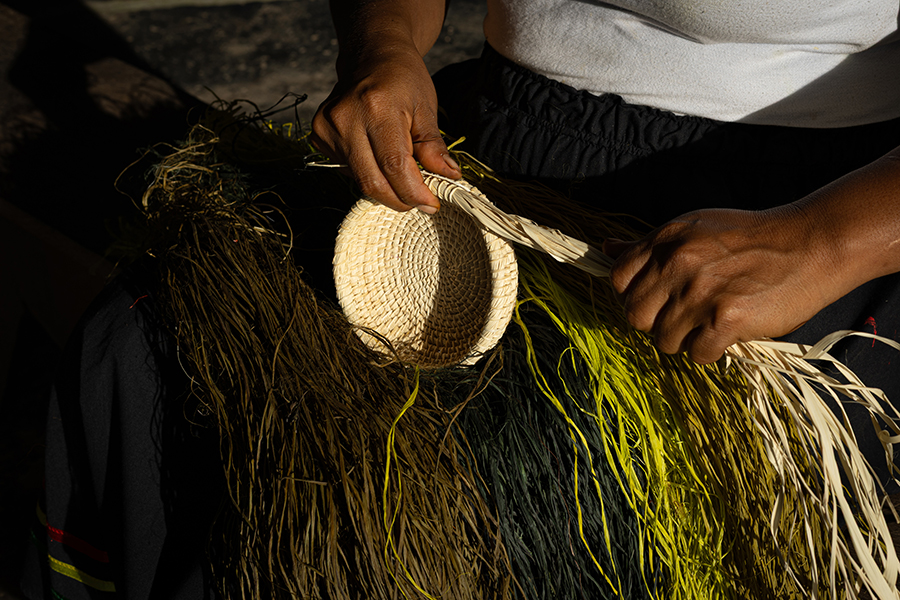
It is practical and visible.
What began with six women and Lissy’s vision in 2006 has grown into a network of hundreds of artisans across the Amazon, with over eight artisan markets established across the National Reserve. Their work, chambira palm craftsmanship dyed with fruits, leaves, roots, and bark, was at risk of disappearing as modern goods entered the jungle. Keeping that knowledge alive, dignified, and economically viable is environmental stewardship in its most human form.
BioRest also includes the Chonta Project, which donates three palm trees for every one harvested for culinary use, partnering with local growers to ensure sustainable reforestation. The Bee Project introduces stingless beehive colonies to communities along the river, improving nutrition and crop pollination simultaneously. A farm-to-table garden invites local schoolchildren to grow their own food.
In 2025, that long commitment took formal shape along the Marañón River. Three community agreements signed. Eighteen families participating. One thousand six hundred and eighty native plants delivered in the first phase alone, with more than three thousand trees and shrubs planned for restoration by 2026. These are living commitments, rooted in soil, growing season by season in a territory that has been asking for this kind of partnership since long before the language for it existed.
Health programs including dental visits and nutrition support travel the river’s length. Conservation research on river dolphins continues through a long-term partnership with ProDelphinus, alongside citizen science programs that feed data into SERNANP, eBird, and iNaturalist. And cultural continuity through music, dance, cuisine, and artisanal traditions is carried forward by the communities we work beside.
What sets Delfín apart from other operators in the region?
Sustainability here is identity, woven into daily operations and long-term relationships. Community impact is direct and grounded in trust built over nearly two decades. Guests are invited to learn and participate through citizen science, cultural encounters, and guided understanding of the territory.
ON TOURISM AND THE AMAZON
Can responsible tourism truly benefit the environment?
The research is clear. According to the World Bank, every two dollars invested in protected area tourism generates at least twelve in return, and sustainable tourism across the Amazon is valued at approximately 2.3 billion dollars annually. Forests that remain standing generate far more economic value per hectare than land cleared for agriculture or extraction. The Amazon is worth more alive, and travel, when designed with that truth at its centre, becomes one of the most powerful arguments for keeping it that way.
The evidence also points to something less easily quantified. Studies by the IUCN confirm that when economic benefits from tourism flow directly to communities with a genuine stake in the land, those communities become its most effective stewards. Conservation that is locally governed and locally valued holds. Conservation imposed from the outside rarely does.
That is the logic Delfín was built on. When the people living beside the river benefit from its health, they protect it. And the protection is specific, daily, and lasting.
Guests who have sailed with Delfín describe village visits as among the most moving moments of their journeys. One guest wrote about visiting the San Francisco community, where locals sustained themselves through handmade arts and crafts, where a child held her hand throughout, and where a mother gifted her a handmade bracelet as a gesture of gratitude. That exchange, economic, cultural, and deeply human, is what makes conservation not just possible, but durable.
Can tourism and sustainability truly coexist?
Yes. When travel behaves like a guest. When it is low-volume, locally led, and designed to strengthen what already exists. When it channels value into conservation and dignified livelihoods. When it treats wildlife and communities with respect, context, and genuine care.
How does Delfín demonstrate genuine commitment?
Through decisions made consistently over nearly two decades.
Our vessels are built in the Iquitos docks by local artisans using sustainably sourced timber, a single decision that eliminates the carbon footprint of imported materials and keeps a living boatbuilding tradition economically viable. The same logic shapes what hangs on the walls. Original works by Peru’s leading contemporary artists travel alongside the vessels, including paintings by Harry Chávez, a Lima-born artist whose work draws from shamanic tradition, pre-Hispanic imagery, and Amazonian mythology to propose a living, contemporary vision of the jungle. His hypnotic creatures and layered symbols do not decorate the space. They ask questions of it. Art here is treated as a form of witness, and as a way of ensuring that the Amazon is understood not only through science or landscape, but through the imagination of those who have always known it most deeply.
Delfín is also a Relais & Châteaux member, a distinction requiring independently verified commitments to hospitality, cuisine, and sustainability. External validation, earned and renewed, rather than a claim made about oneself.
ON THE SIZE OF THE VESSEL AND THE DEPTH OF THE JOURNEY
Why does the size of a vessel matter in the Amazon?
In the Amazon, smallness is access. Delfín I, our most intimate vessel, accommodates just four guests. That scale changes everything: the pace, the quiet, and above all, the reach.
Where larger ships must stay on the main river, Delfín I moves deeper. Into the narrow, shallow tributaries that open only to those who travel lightly. Into the still waters where pink dolphins surface close. Into the forest channels where the canopy closes overhead and the sounds of the jungle fill the air on all sides. Into rhythms of the river that most travelers simply never reach.
Fewer guests also means fewer disturbances, giving the ecosystem more space to remain itself. And relationships with communities stay personal, unhurried, and real, because the encounter is built for depth rather than volume.
What is the difference in footprint compared to a large cruise ship?
Scale shapes everything. With fleets of four to forty-four guests rather than thousands, the per-person environmental footprint is a fraction of ocean cruising.
ON THE RIVER AS TEACHER
Why does Earth Day matter here, in the Amazon?
Because the Amazon is alive. It is a system that influences biodiversity, water cycles, and climate far beyond its own shores. To honour Earth Day here is to practise attention, to recognise interconnection, and to act with care.
What does responsible travel look like on the river?
It looks like moving slowly. Listening more than speaking. Entering communities with respect. Choosing experiences that support conservation and local livelihoods. And learning the ecology of place through naturalists who know the forest from within, by rhythm as much as by name.
What is citizen science, and how can guests participate?
Citizen science is shared observation. Guests aboard Delfín III can deploy Acoustic Seapods to record pink river dolphin sounds in collaboration with Dr. Joanna Alfaro, collecting data on sightings and attending Q&A sessions on conservation. Guests can also log birds, dolphins, and other species through platforms such as eBird and iNaturalist, turning presence into contribution and wonder into data.
In the Amazon, data begins with attention. A call overhead. A fin at dusk. A pattern repeated across seasons. Travelers become contributors to real research.
Why do birds matter so much in conservation?
Birds are sensitive indicators of ecosystem health. When their patterns shift, the forest is speaking. Birdwatching becomes a way to listen, and over time, a way to support monitoring that matters.
What is the role of the naturalists on board?
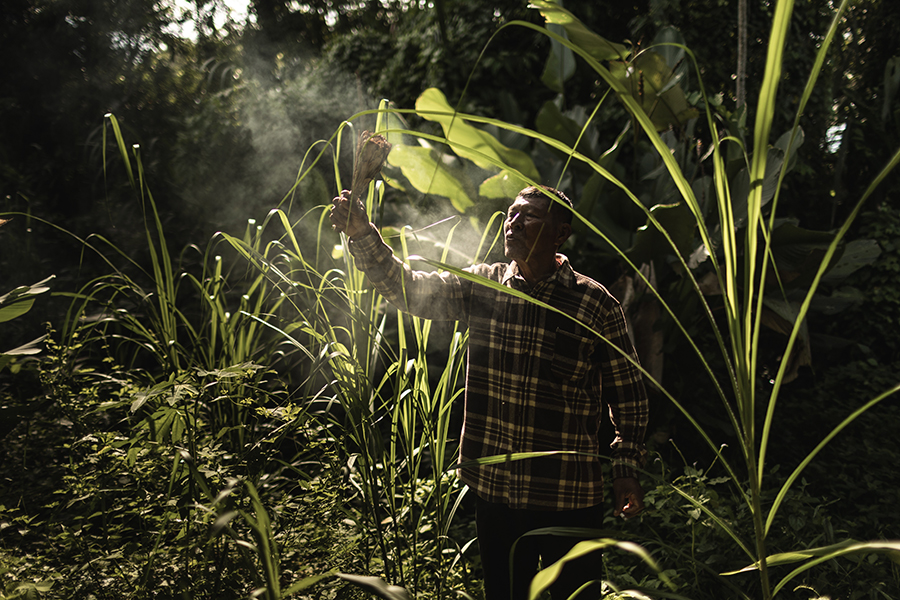
Naturalists are translators of the territory. They help guests read the river, recognise species, and understand the rhythms of each season. Many come from the region and carry knowledge that is both scientific and ancestral. They move at the pace the rainforest sets, inviting you to slow down, to listen, and to look more closely.
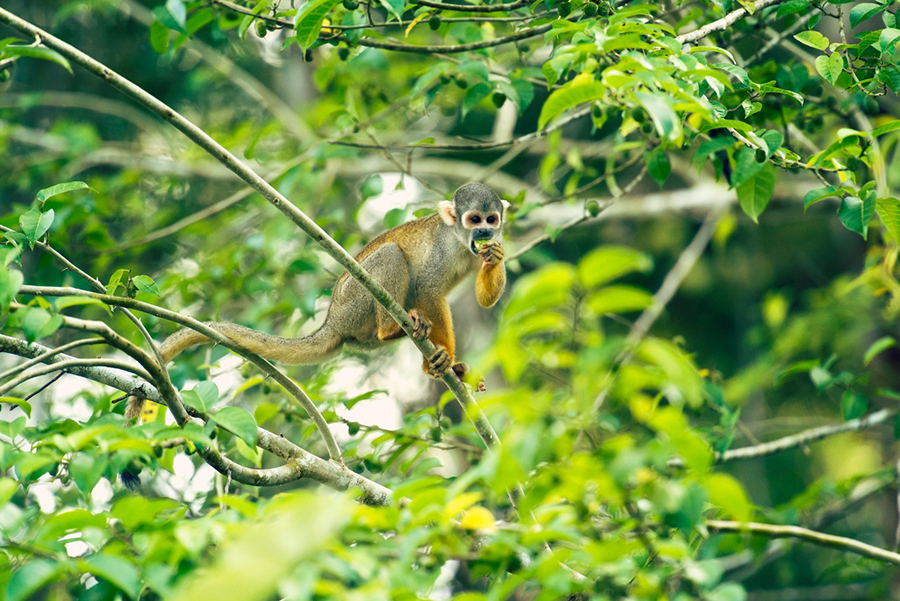
How do you approach wildlife encounters?
With distance, quiet, and respect. Encounters happen on the forest’s terms, and we design our journeys accordingly.
ON THE STORIES THE JUNGLE KEEPS
What is the role of oral history in understanding the Amazon?
In the Amazon, memory is a living river, carried by voices, songs, and stories whispered from one generation to the next. The forest has always been read before it was written. Its wisdom is not found in books, but sung by the wind, painted by the river, and told by the people who live within it.
Lissy understood this from the beginning, and it shaped one of the most quietly powerful elements of the Delfín experience: Cuentos del Amazonas, a collection of Amazonian legends curated by Lissy herself and placed each evening on the pillow of every guest. Alongside a piece of locally made chocolate, guests find an illustrated tale drawn from the oral traditions of the communities the vessels travel beside. Stories of the pink river dolphin who inhabits two worlds at once, living in harmony at the bottom of the river in a realm so beautiful that those who glimpse it may never wish to return. Stories of the Chuchuhuasi tree, whose spirit carries the voice of a lost son, offering comfort and healing to those who come to it with respect. Stories that remind those who listen that the forest is not a backdrop, but a presence, and that every legend holds a lesson and every myth a form of memory.
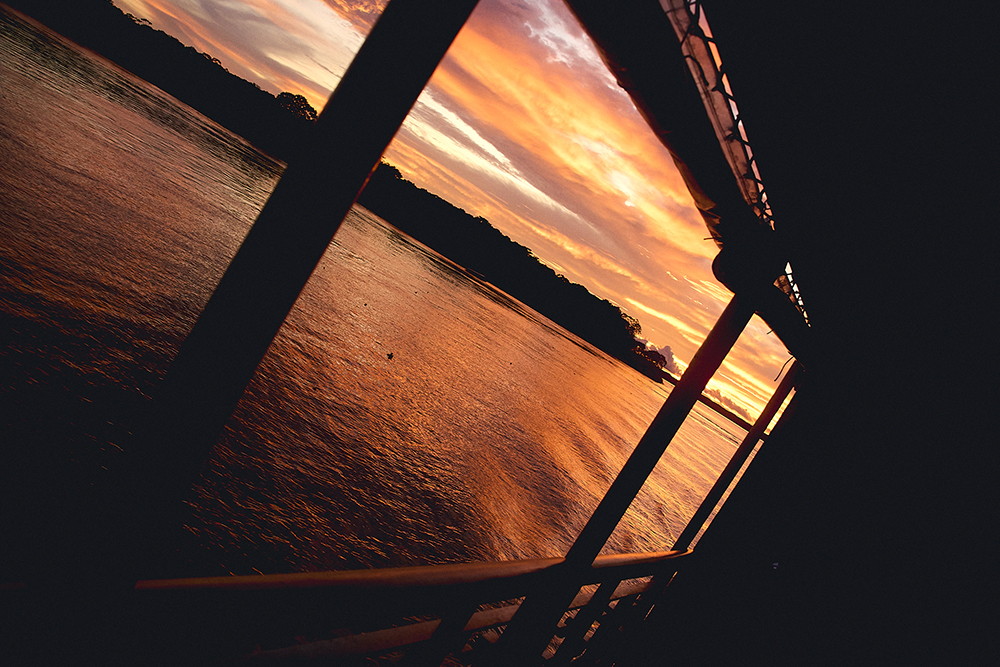
These are not decorative details. They are the invisible threads that connect people, forest, and future. Through Cuentos del Amazonas, Delfín honours the understanding that to truly know a place, you must hear how it speaks to its own people, at the end of the day, when the light is gone and the river moves in the dark and the jungle begins its other life.
ON LUXURY, CRAFT, AND RECIPROCITY
What does ethical luxury look like in the Amazon?
It looks like presence. It looks like restraint. It feels human. Ethical luxury values craft over excess, thoughtful design over spectacle, and service that is attentive while keeping the river and its communities at the centre of benefit.The objects that surround you on board carry the hands and imaginations that made them.
How does Delfín support local livelihoods?
Through employment, training, and long-term collaboration with communities and artisans that keeps value in the region and in the hands of the people who live here. What began with six women has grown to include hundreds of artisans across the Amazon. That is two decades of documented work.
How do you approach craft and culture?
As living continuity. Guests are invited into contexts of making, with attention to origin, technique, and meaning. The chambira palm craftsmanship preserved through Delfín’s artisan work, dyed using fruits, leaves, roots, and bark, carries ancestral knowledge in every piece. Craft is treated as knowledge, carried forward.
What does reciprocity mean in practice?
Relationships that flow both ways. Fair partnership. Shared benefit. Ongoing commitment.
One guest wrote that the itinerary drew them deeper into the rhythms of Amazonian life, and that the staff treated them like family. That shift, from tourist to participant, is where real change begins.
How does food connect to regeneration?
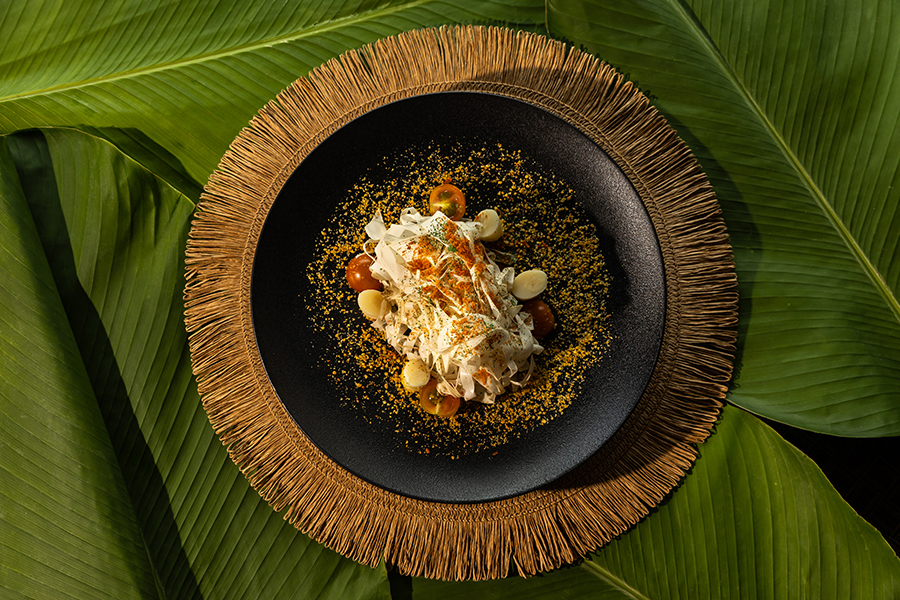
Food is ecology. Sourcing locally supports regional producers and reinforces food systems connected to the forest. The Chonta Project donates three palm trees for every one harvested, linking consumption with continuity. When ingredients come from nearby hands and waters, the meal carries the place with integrity.
How do you think about waste in a place like the Amazon?
Waste is never truly away here. Everything returns to water, to soil, to life. We focus on reduction at the source, thoughtful purchasing, and systems that protect the river from avoidable harm.
How does Relais & Châteaux connect to Delfín’s philosophy?
Relais & Châteaux reflects a shared commitment to hospitality rooted in place, craft, and human connection. Membership requires verified commitments to all three. For Delfín, it aligns with intimacy, cultural grounding, and a deep respect for nature as host rather than backdrop.
Is regenerative travel only about nature?
It is equally about people, memory, dignity, and continuity. A healthy ecosystem and a thriving culture support each other. BioRest holds both.
On what we hope guests carry home
What can a guest do to travel with more care?
Pack light, and pack thoughtfully. Delfín invites guests to bring school supplies, children’s vitamins, toothbrushes, and gently used clothing, with the option to personally deliver donations to the communities visited along the journey. Stay curious. Participate in citizen science. Move gently in communities and in nature. And carry the learning home, where choices continue long after the voyage ends.
What do you hope guests feel when they leave?
A quieter kind of awe. A deeper sense of belonging to the living world. And the understanding that travel can be a choice toward repair, when it is guided by reciprocity.
Earth Month is a remembering.
That the Amazon is alive. That it holds countless beings, languages, and lineages of knowledge. That how we travel can either weaken or strengthen what we love.
At Delfín, our promise is simple. To keep weaving hospitality with purpose. To keep choosing partnership over extraction. To keep crafting journeys that honour the river’s pace and the forest’s intelligence.