

Commitment to the Amazon

This is what ours looks like.
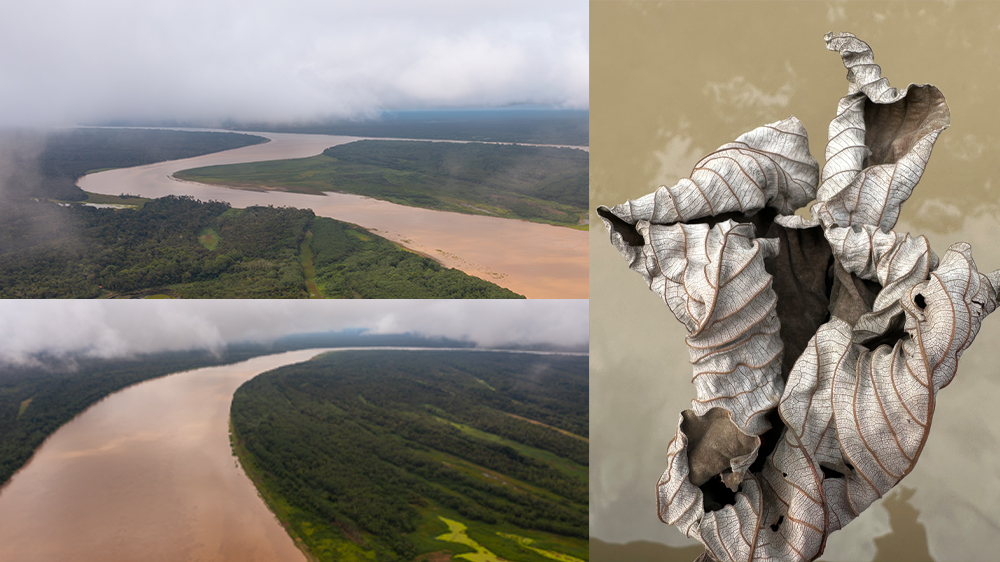
There are mornings on the river when the world feels newly made, as though everything has quietly begun again.
As mist loosens from the canopy, the water begins to hold the colour of leaves. Meanwhile, a heron lifts slowly and precisely, as if time itself were learning to breathe.
We have been sailing this river for twenty years. Over time, we have become certain of one thing: the Amazon does not simply ask for less harm. Instead, it asks for active care.
This, ultimately, is the difference between sustainability and commitment. Sustainability often asks what we can reduce. Commitment, however, asks what we are restoring and who we choose to stand beside while doing it.
So what does that look like in practice?
The forest and its people are inseparable
Since 2006, when our founders Aldo Macchiavello and Lissy Urteaga dreamed of a journey that would honour both the rainforest and the communities who call it home, Delfin has operated exclusively in the Peruvian Amazon. Not as one destination among others. As the essence of our identity.
Our vessels are built in the docks of Iquitos. Decisions are shaped by the river itself, while every alliance remains rooted in the territory.
This is why we speak of biocultural regeneration: the simultaneous restoration of biodiversity and the ancestral wisdom that sustains Amazonian life. Because the forest and its people have never been separate, and neither is our commitment to them.
Our work is built on four pillars: planning and operations, community empowerment, conservation of biodiversity and culture, and climate action. Together, they form a model of regenerative hospitality that grows deeper with each season.
BioRest: planting the future along the Marañón
In July 2025, we launched BioRest, our flagship biocultural restoration program, along the Marañón River, in voluntary collaboration with the communities of San Francisco, Amazonas, and Puerto Prado.
Three community agreements were signed. Eighteen families chose to participate. In the first phase, 1,680 native plants were delivered across a 172-hectare restoration corridor. By 2026, more than 3,000 trees and shrubs will have been planted.
But BioRest is not only about planting. It integrates agroforestry systems, ethnobotanical gardens, community field schools, and the active recovery of traditional plant knowledge at risk of being lost. It links biodiversity conservation with social well-being and economic resilience, because in the Amazon, these goals have always been one.
Science that travels with us
Our vessels serve as floating research platforms.
We maintain a long-term research partnership with ProDelphinus focused on Amazon river dolphins, one of the river’s most extraordinary and most vulnerable inhabitants. Beginning in 2026, our guides and guests will participate as citizen scientists, contributing wildlife observations directly to SERNANP and to international databases including eBird and iNaturalist, data that feeds into the management plan of the Pacaya Samiria National Reserve.
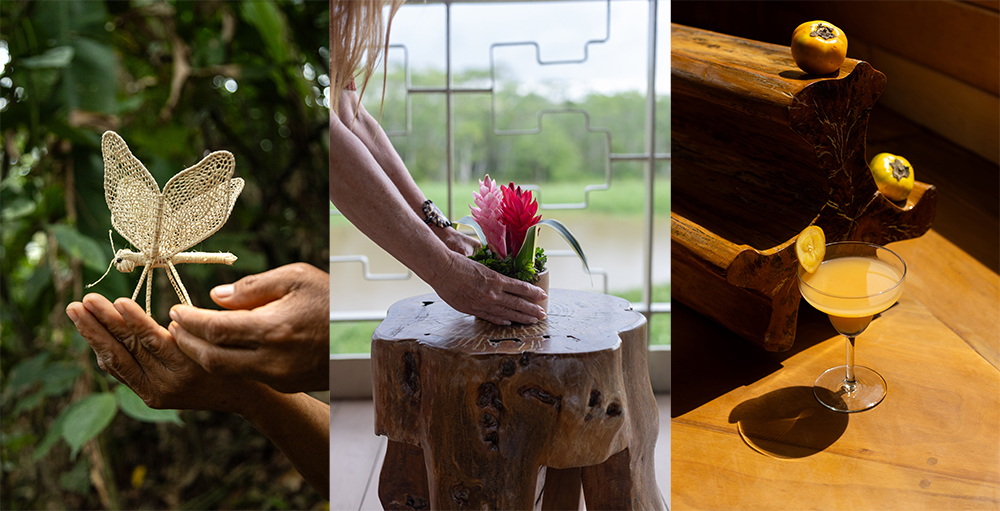
We are also conducting baseline inventories of birds and botany that inform BioRest, and a thesis researcher is beginning a dedicated inventory of diurnal butterflies in Puerto Prado.
The data begins with attention. A call overhead. A fin at dusk. A pattern repeated across seasons. Awe, becoming knowledge.
Measuring what we take
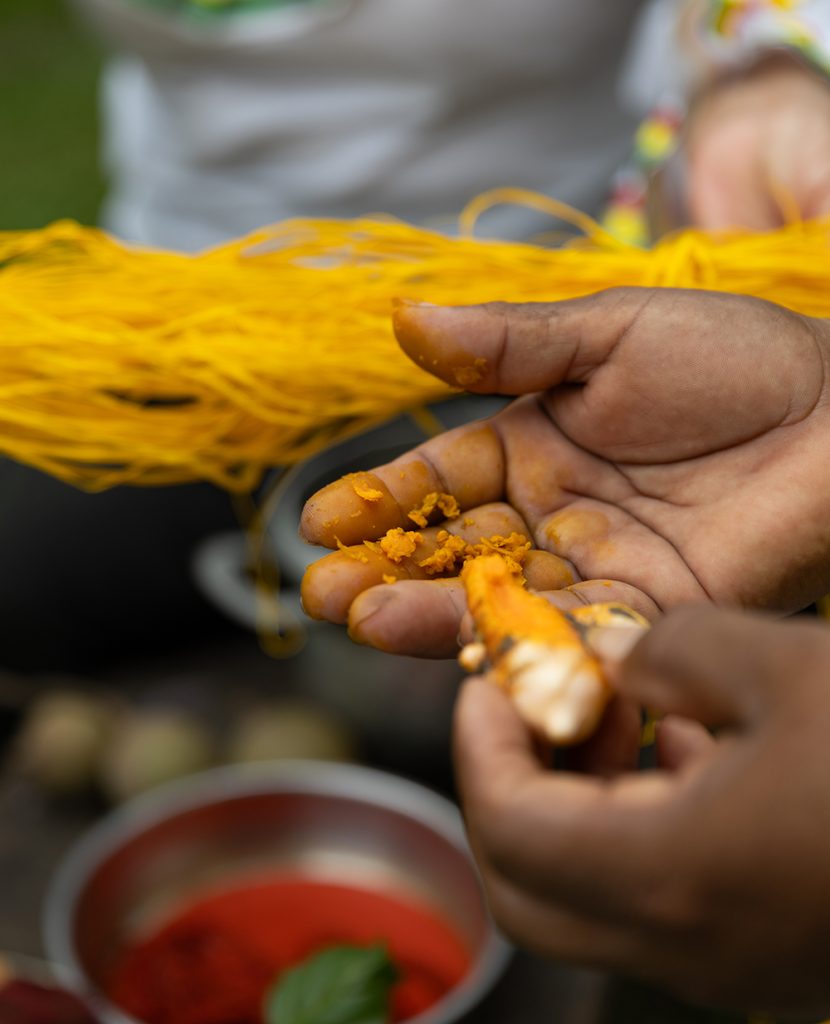
In 2025, we launched our Carbon Footprint Program, a technical and ethical initiative to measure and manage greenhouse gas emissions across all operations: hospitality, logistics, and river travel.
We use the My Impact platform aligned with the Relais & Châteaux framework, complemented by IPCC methodology analysis to establish a decarbonisation baseline connected to Peru’s national climate commitments.
Our goals are concrete. Eliminate single-use plastics by mid-2026. Reduce emissions per guest-night by 20% by 2030. Optimise water treatment systems to protect the river. Divert up to 40% of organic waste from landfill through composting. We maintain recycling partnerships with local municipalities for glass, plastics, and metals.
These are not aspirations. They are the next steps in a plan already in motion.
Culture as living continuity
For twenty years, we have built relationships with riverine communities grounded in reciprocity, not transaction.
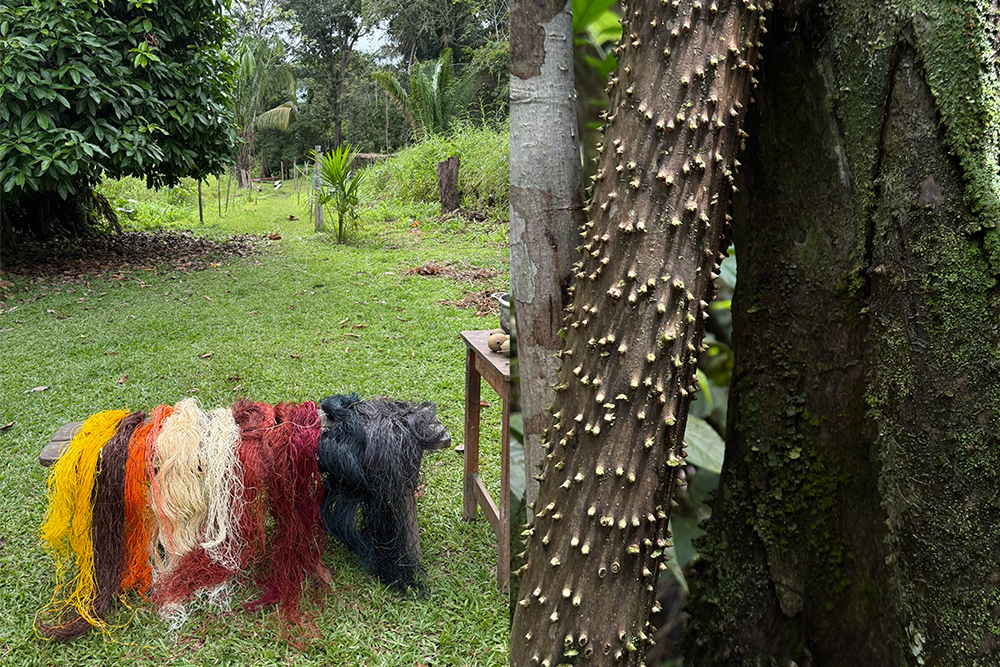
A cornerstone of this is our ongoing collaboration with women’s artisan associations who transform chambira fibre into intricate crafts sold on board, creating fair, sustained income while preserving ancestral knowledge that belongs to the Amazon’s living heritage.
Our guides and crew carry Amazonian stories and myths into every journey, keeping oral traditions and worldviews alive not as performance, but as genuine transmission, generation to generation.
In 2025, our naturalist guides completed specialised training in environmental education, cultural interpretation, and citizen science. That same year, our crew received certification from Save the Children International in safeguarding children and vulnerable adults, because commitment to the territory includes commitment to everyone within it.
A table rooted in place
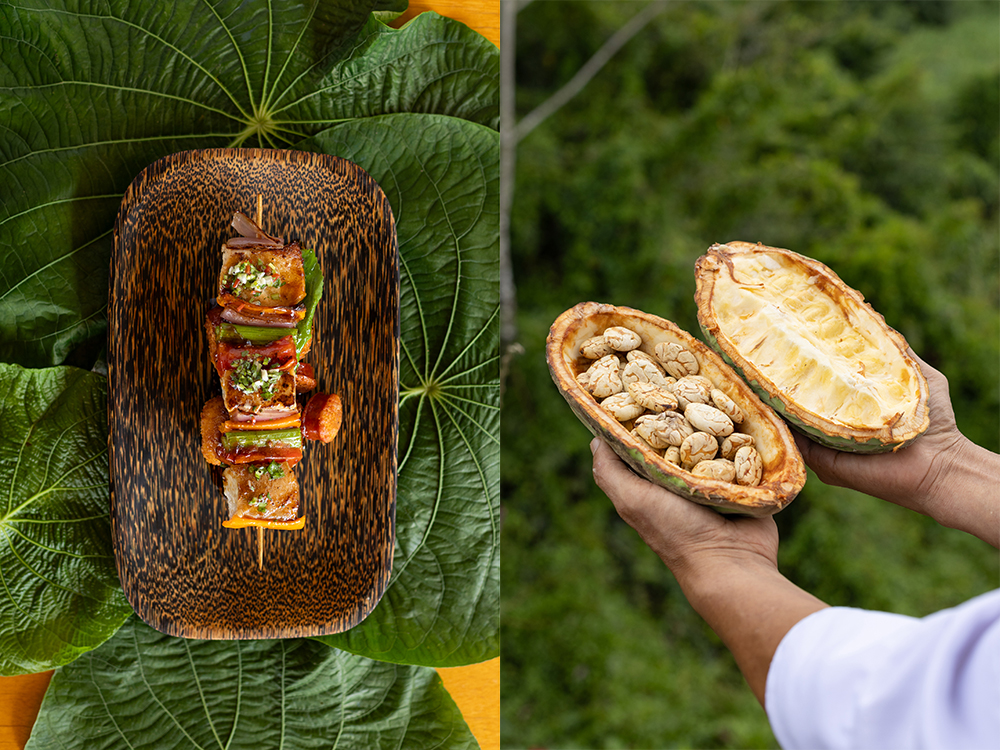
Our cuisine is where restoration and nourishment meet.
In 2025, 80% of our ingredients came from regional producers: paiche, camu camu, aguaje, plants whose names carry the memory of the forest. The longer vision is to include crops grown through BioRest itself in our culinary offering, closing the loop between what we plant and what we serve.
When the meal carries the place with integrity, the table becomes part of the commitment.
The people who make this possible
99% of the Delfín team is Peruvian, most from the Loreto region. Approximately 30% of leadership positions are held by women. Our culture is founded on respect, continuous learning, and well-being, because the river deserves people who are genuinely held by the place they serve.
This commitment is internal too. It lives in how we hire, how we train, how we grow.
What we are building toward
2026 is a year of consolidation, translating intention into lasting systems.
We are formalising biodiversity monitoring protocols in partnership with SERNANP, ProDelphinus, and IIAP. Expanding BioRest with community nurseries, seed banks, and field schools. Developing fair trade agreements with artisan partners. Publishing measurable impact indicators aligned with international sustainability frameworks.
We name these goals publicly because accountability means speaking plainly about the distance between where we stand and where we are going.
True luxury, for us, is not excess. It is not spectacle.
It is intention. The choice to listen, to care, to restore. To build relationships with communities grounded in reciprocity. To ensure that a journey through the Amazon leaves the forest, the river, and its people more alive than before.
This is what we mean when we say Commitment to the Amazon. A living process, guided by science and sensitivity, by community and care, by memory and long-term vision. Not a finished statement. A practice, deepened by every voyage, every season, every choice made in relationship with this extraordinary place.
Woven by Nature, Crafted for You.