



Amazonian art has stepped out of the margins and into the canon, with institutional backing, curatorial discipline, and clear authority. In the last two years, Indigenous Amazonian artists have not been appended to contemporary art; they have helped redefine it: its vocabulary, its frameworks, and its stakes.
Sara Flores and “Non Nete” at MALI
A defining figure in this shift is Sara Flores, whose work has moved from community practice to the center of international discourse. Alongside her selection to represent Perú at the Venice Biennale, she received a major solo exhibition at the Museo de Arte de Lima ( MALI) in March 2025, her first solo show in a Peruvian museum. The exhibition was organized with the Shipibo Conibo Center and supported by proyectoamil and White Cube.
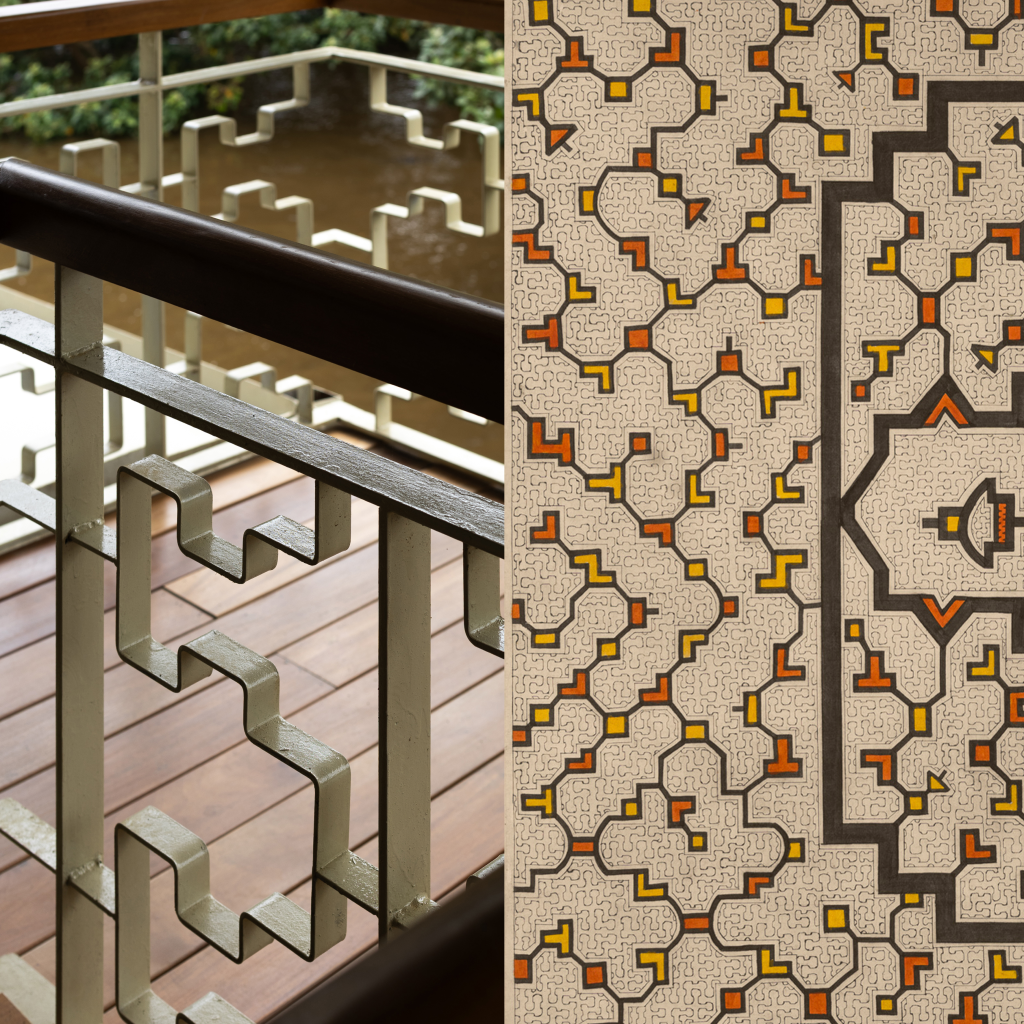
“Non Nete,” literally “our world,” was the curatorial axis of the MALI exhibition. It names an Indigenous vision of interdependence that links animals, plants, humans, and more than human beings, and connects distinct realms such as the world of water and the world of ideals. The term also carries a temporal sense, evoking cycles of renewal oriented to a just and sustainable future.
Flores’ kené practice is not pattern as ornament. She works on tocuyo (traditional cotton) with natural dyes to create labyrinthine compositions that visualize neural, spiritual, and ecological networks, an eco-dependent worldview that feels urgent in the face of Amazonian threats. Within the exhibition she presents the Shipibo Nation Flag, articulating a political dimension grounded in ecofeminism and deep ecology.
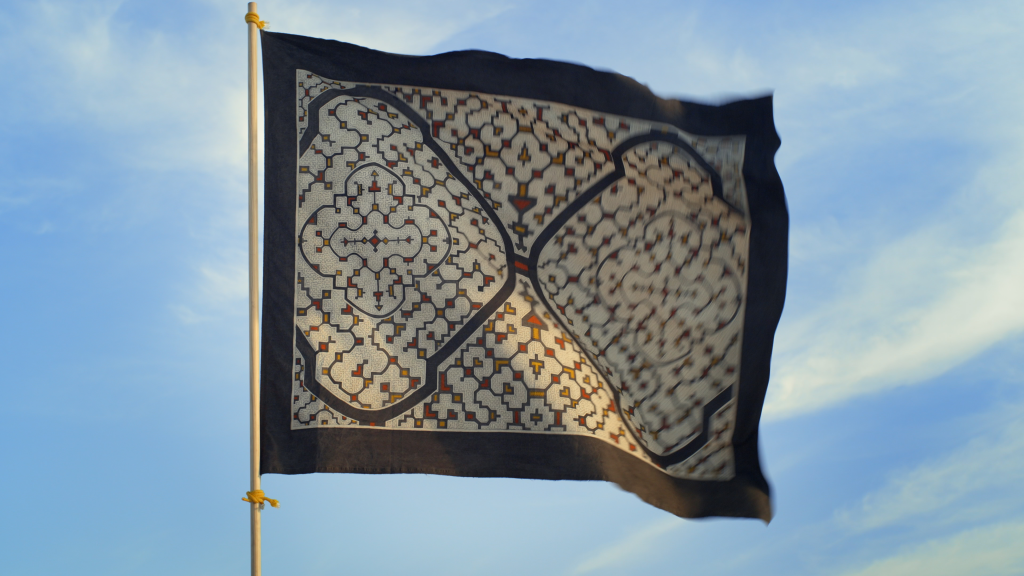
Sara Flores (Tambomayo, 1950) Non nete (Una bandera para la Nación Shipibo)
This recalibration extends beyond exhibitions. Museum collections are recognizing Amazonian narratives as contemporary thought. The Solomon R. Guggenheim Museum acquisition of Mundo acuático en el Amazonas by Santiago Yahuarcani signals a move away from ethnographic footnotes toward conceptual depth.

Why Now
Amazonian art is not suddenly new. What is new is that the frameworks that once marginalized it are fracturing. Institutions are responding to the climate crisis, to decolonial thought, and to the need for plural systems of knowledge. Amazonian visual languages are inseparable from river, forest, and community. They do not only illustrate nature; they articulate our relationships within it.
Aesthetically, these languages feel both ancient and contemporary. Geometry, repetition, rhythm, and abstraction are not stylistic choices but structural expressions of worldview.
They resonate with audiences who seek coherence and depth in a fragmented world.
Delfin Amazon Cruises as a Cultural Pioneer
Long before Amazonian art entered biennials and major collections, Delfin Amazon Cruises integrated it into the travel experience with intention and respect. Art onboard is not decoration or souvenir. It is a way of understanding place, part of how the Amazon thinks, remembers, and transmits knowledge.
Design that Integrates Kené into the Vessel
Delfin’s relationship with Amazonian aesthetics is not only curatorial; it is architectural. As Horacio Goitre of Vicca Verde explains, the team developed geometric patterns inspired by Shipibo cultural motifs, reinterpreted as contemporary structures of light and shadow, always avoiding a folkloric feel and embedding meaning rather than applying decoration. This is the difference between trend and integration: a design philosophy in which Amazonian visual intelligence becomes the vessel’s structure and atmosphere.
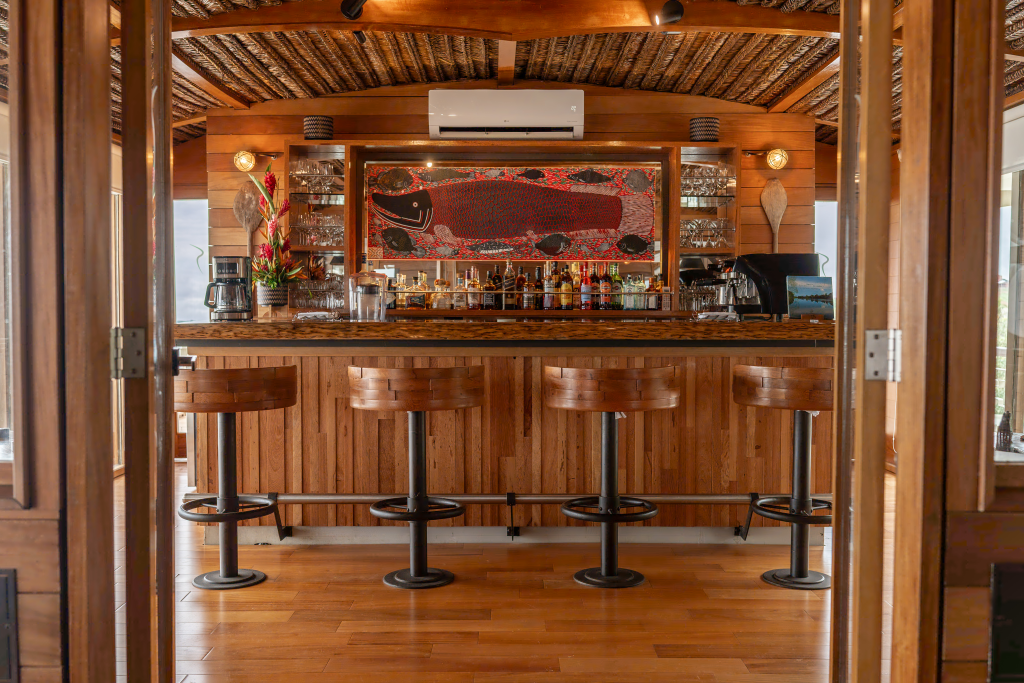
Artists Aboard Delfin I
Delfin’s cultural strategy lives onboard.
- Harry Chávez created a constellation of beings conceived as guardians and cartographies, works that carry memory, transformation, and the intelligence of nature.
- Jorge Carmona del Solar extends a cinematic sensibility into image and narrative, layering storytelling, landscape, and myth.
- Rodan and Harry Pinedo contribute a bar centerpiece Paiche painting drawn from vision, ritual knowledge, and ancestral transmission.
- In shared spaces, Gabriela Maskrey introduces a complementary contemporary graphic language.
Together these works form a lived environment where art, river, and journey are inseparable.
From Visibility to Responsibility
Visibility without context risks extraction. Appreciation without understanding flattens meaning. Delfín points to a different path: cultural engagement that is slow, relational, and rooted. This is a vessel that does not borrow the Amazon as an aesthetic but belongs to it through long term commitment, collaboration, and an experience built on meaning.
What museums and biennials are recognizing today is an overdue acknowledgment of worlds that have always generated knowledge, beauty, and contemporary thought. Delfín has been navigating this current for years, quietly and consistently, guided by the understanding that the Amazon is not a backdrop but a living cultural world whose voices deserve to be seen, heard, and respected.