


The Sound is the Point
An invitation to join us for Global Big Day, on the river and wherever you are
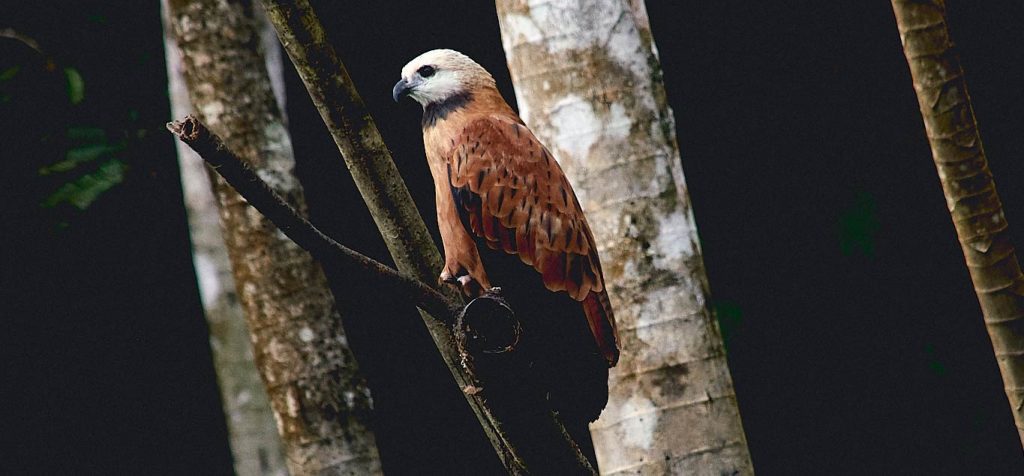
Just before dawn on the Marañón, this is Amazon birdwatching at its most elemental. The forest has not finished negotiating with itself: the sound of someone tightening a strap, and then, quite suddenly, the unmistakable wheezing call of a hoatzin. Prehistoric. Unembarrassed. The forest’s odd welcome committee.
This is May 9, 2026. Saturday. The day birders the world over have marked in their calendars. Global Big Day, run by Cornell Lab of Ornithology, is the largest single-day biodiversity recording effort on Earth. Last year it pulled in more than 1.7 million people across 200-plus countries and logged roughly 7,900 species inside 24 hours. It runs alongside the Western Hemisphere’s spring observance of World Migratory Bird Day. The 2026 theme is Every Bird Counts: Your Observations Matter, and it sits inside the 60th anniversary of the International Waterbird Census.
That last part matters here. The Pacaya Samiria reserve has been a Ramsar wetland since 1986, the largest protected flooded forest on the planet, holding somewhere between 449 and 527 documented bird species. Perú came second worldwide on Global Big Day last year with 1,399 species in 24 hours. The very first Global Big Day, in 2015, was won by Perú with 1,188 species, and the date was, with some poetry, May 9.
We are joining in. Our naturalist guides will be searching for the rarest and enigmatic species, raising awareness about the need to conserve this special place on earth from our skiffs all day, turning our Amazon river cruise into a research vessel for 24 hours. And we would like you to join us, wherever you are.
Birding, but not the way you think
Here is what we do not mean by birding. We do not mean the clipboard. Nor do we mean the competitive list, or the urge to turn a wet morning in the Amazon into an exam. What we mean, instead, is the practice of paying attention to something that has not asked for your attention. Birds, after all, do not perform. They will not arrange themselves for your camera roll. To watch them properly, therefore, you have to slow down, soften your gaze, and listen in a different register. Indeed, many cultures have treated Amazon birdwatching as something close to prayer.
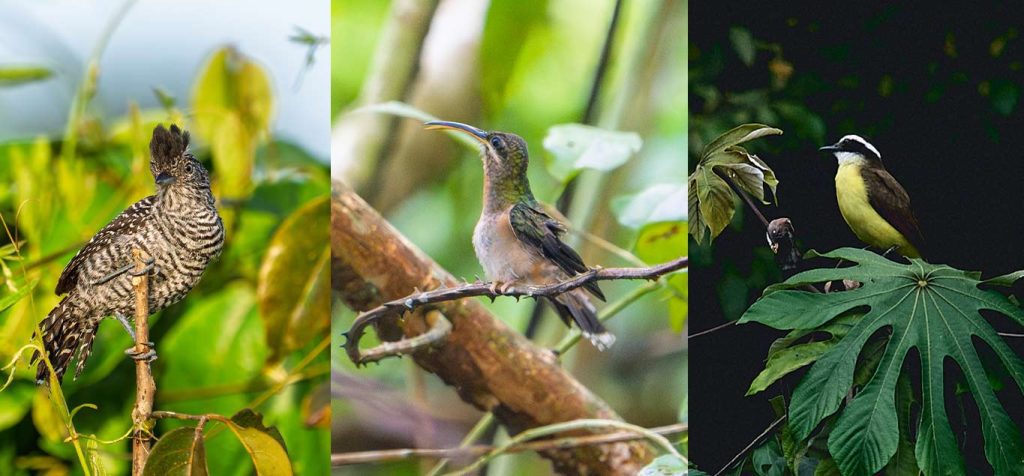
Listening to birdsong measurably reduces anxiety. Time in biodiverse environments restores attention more reliably than time in monocultural green space. What ornithologists call the soundscape, the full acoustic signature of a place, tells you more about the health of an ecosystem than almost any other indicator. Living forest sounds different from dying forest. You can hear the difference, if you are quiet for long enough.
Not the hobby it used to be
If your image of a birder feels outdated, it may be time to rethink it. Birding has become one of the fastest-growing pastimes among Gen Z and millennials. A 2022 US Fish and Wildlife Service survey found that 37 percent of Americans aged 16 and over now bird in some form. In the UK, regular Gen Z birders have grown by more than 1,000 percent since 2018. The hashtag #birdwatching has hundreds of thousands of posts on TikTok. A 2025 documentary on extreme birding logged 1.3 million YouTube views inside its first month.
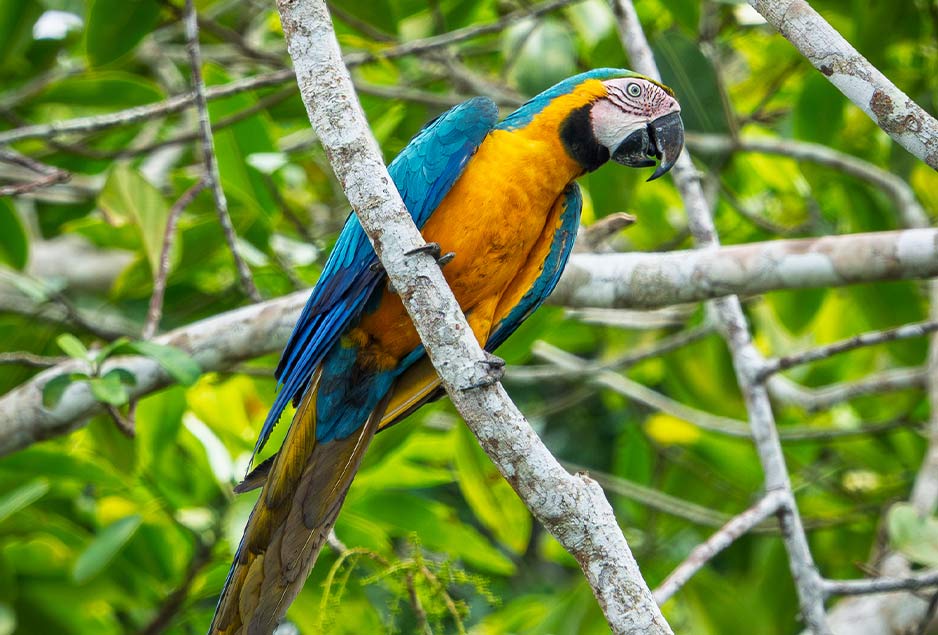
The cultural framing has shifted too. Birding is being talked about as a way for younger people to build in-person community in a disconnected time. A sociable, everyday pursuit on the same shelf as a run club or a trivia night. A small, slow act of resistance against burnout and the routine of online life.
The paradox is the interesting part. The same generation that grew up inside the algorithm is using technology (eBird, Merlin, BirdTok) to find a way out of it. The phone identifies the bird. The bird is the reason to put the phone down. Apps do the heavy lifting of identification so newcomers can focus on the part no app has ever been able to deliver: the moment of actually seeing the thing.
It is a quietly perfect 2026 hobby. Low cost. Low ego. Outside. Slow. Not optimized for spectacle. And, as it happens, useful to science.
What the algorithm cannot tell you
We are not against technology. Cornell’s free Merlin Bird ID app is a small marvel. eBird has reshaped global conservation science. Our guides use both. But there is a difference between a tool and a substitute, and the difference matters.
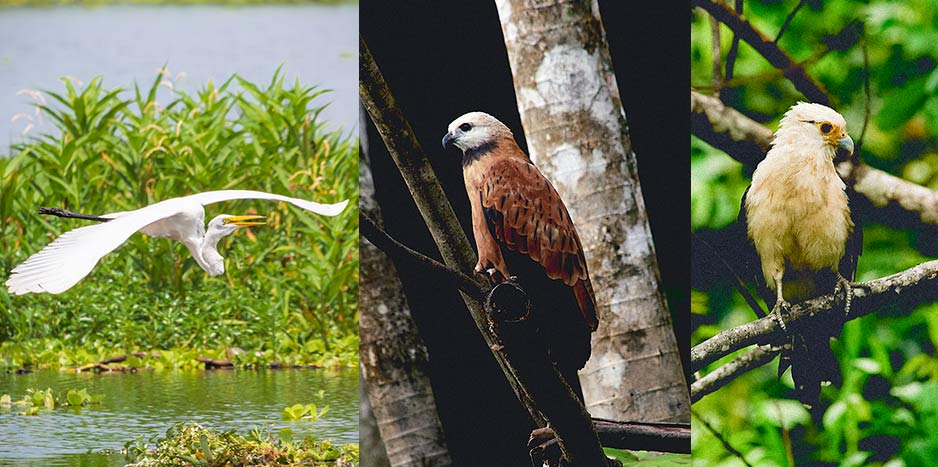
Here is what a large language model cannot tell you about Amazon birdwatching. It cannot capture the moment a horned screamer takes off ten metres from the kayak and the air briefly belongs to the bird. Nor can it convey that the guide standing next to you grew up in this forest, that his mother taught him to recognise a Spix’s guan by its call before he could read, and that he has been watching the same oxbow lake change for thirty years with things to say about it. Likewise, no algorithm knows which suite catches the morning light. And in the end, none of them can tell you who to trust.
Algorithms are good at smoothness. They are not very good at grain. And the grain is where the trip lives.
The list of birds you see today will be a souvenir. The sound is the point.
Why birding matters now
Pacaya Samiria is one of the most important freshwater ecosystems on Earth, and it is under pressure. Illegal logging. Unregulated fishing. Climate-driven changes to the flood cycle that has shaped this place for millennia. The reason it is still here in anything like its current condition is because a coalition of indigenous communities, the Peruvian state, NGOs and responsible tourism operators have built an economic case for keeping the Peruvian Amazon rainforest standing.
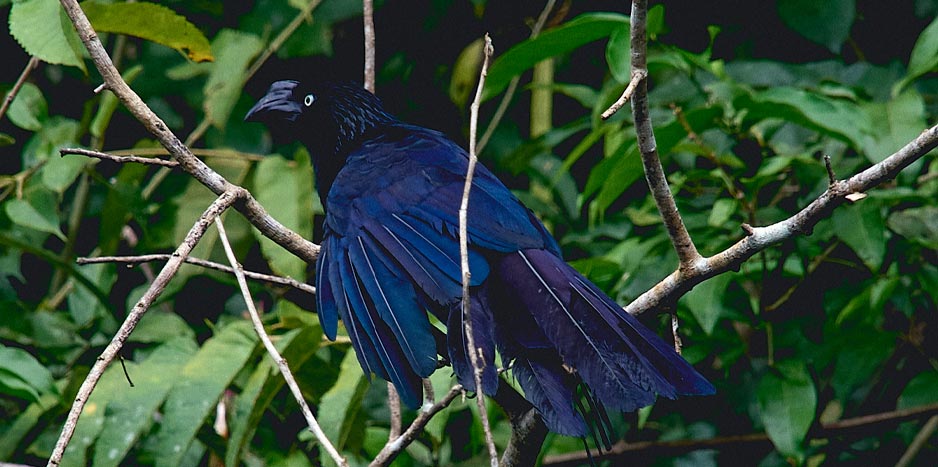
That case rests almost entirely on biodiversity. On birds, pink river dolphins, primates, jaguars, the things that pull travellers through Iquitos and onto a boat. Birds are sensitive indicators. When their patterns shift, the forest is speaking. A change in timing. A change in location. A species that no longer appears where it used to. These are signals that something deeper is changing in the web of life. Birdwatching, done with attention and recorded honestly, is one of the simplest things a traveller can give back to a place.
Responsible tourism is not a slogan. It is whether value stays close to home. Whether prosperity moves through the same communities that keep the forest standing. We are family-run, built in Iquitos, and most of our crew come from the river communities our boats sail through. Many of our naturalist guides have grown up reading this forest the way other people read the morning paper.

How to join us on Saturday
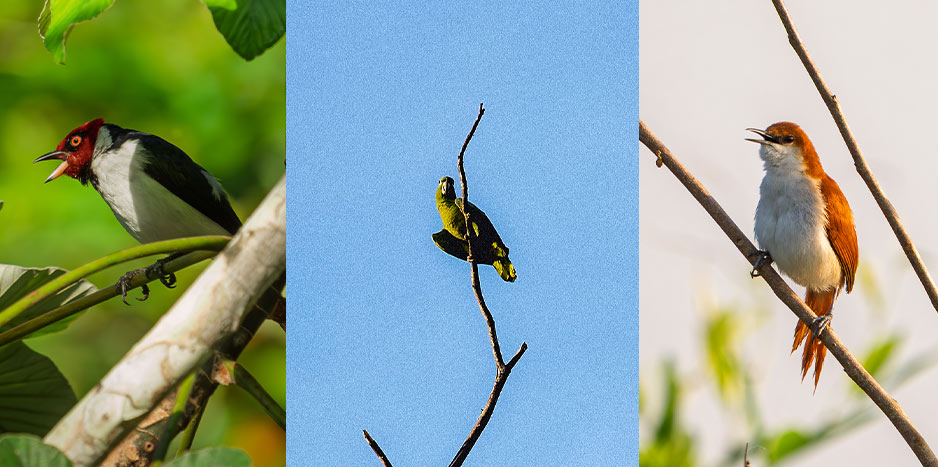
If you are nowhere near the Amazon on May 9, it does not matter. Global Big Day is designed to be done even from your kitchen window. Ten minutes counts. Download the free Merlin Bird ID app from Cornell, or eBird, and log what you see and hear. Last year there were checklists from over 200 countries. You become, briefly, part of one of the largest community science efforts in human history.
You may end up loving something you had been walking past for years. That is the trick of birding. It does not ask you to travel. It asks you to notice. The travel comes later, and when it does, it is better, because by then you know what you are looking at.
Come listen with us.
Woven by Nature, Crafted for You.
The Delfín team
Photography by Jose Alcantara & Paz Vallejo