


El Niño and the Amazon: Following the River’s Changing Rhythm
In the Amazon, the river sets the pace. Its changing levels shape the journeys people make, the places they fish and farm, and the landscapes that come into view through the year. People who live beside it learn to read those changes closely.
El Niño is one influence on the river’s rhythm. It begins in the tropical Pacific, thousands of miles away, and can affect rainfall across the Amazon. Its effects vary from year to year and from one part of the basin to another.
What El Niño really is
The name El Niño means “the boy” in Spanish. Peruvian fishermen used it for unusually warm coastal waters that often appeared around Christmas. They called the current El Niño de Navidad, meaning “the Christ Child.” The name was later applied to the warm phase of a wider climate pattern.
That pattern involves both the tropical Pacific Ocean and the atmosphere above it. Scientists call the full cycle the El Niño Southern Oscillation, or ENSO. It has three phases: El Niño, when parts of the tropical Pacific are warmer than usual; La Niña, when they are cooler; and neutral periods, when neither phase is present.
In a typical year, steady trade winds blow from east to west along the equator. They push warm surface water towards Indonesia and Australia. Meanwhile, near South America, cooler water rises from below to replace some of the water moving west. This process is called upwelling.
Over the warm western Pacific, moist air rises and forms clouds and rain. Higher in the atmosphere, air flows back towards the east, where it sinks over the cooler eastern Pacific. This broad loop of rising and sinking air is part of the Walker circulation.
During El Niño, the trade winds weaken. Warm surface water spreads back towards the central and eastern Pacific, and the upwelling of cooler water near South America slows. The area of rising, moisture laden air and rainfall shifts east. That changes the Walker circulation and alters wind and rainfall patterns across the tropics.
As this process develops, the ocean and atmosphere reinforce one another. The warmer water shifts rainfall and winds, while those atmospheric changes help maintain the warm water. This connected pattern is why El Niño means more than a patch of warm ocean or a single storm.
Scientists look for sustained warming across a defined part of the central equatorial Pacific, along with signs that the atmosphere is responding. A short lived warm patch alone is not enough. El Niño events occur irregularly, often every two to seven years, and typically last around nine to twelve months.
El Niño and climate change
Climate change does not cause El Niño. It is a natural pattern of ocean and atmosphere that has been part of Earth’s climate for a very long time. Climate change is the long term warming of the planet, driven mainly by human activities that increase greenhouse gases in the atmosphere. These are different processes.
A helpful way to picture the relationship is as a natural swing happening against a changing background. El Niño shifts heat and rainfall patterns from year to year. Climate change steadily raises average temperatures. When an El Niño occurs, its effects unfold in that warmer climate.
That distinction matters for the Amazon. If a region receives less rain, higher temperatures can increase evaporation from soil and plants and add to their water stress. El Niño may influence the rainfall pattern, while long term warming can make the heat and drying effects more pronounced. The balance between these influences varies by place and by event. The Atlantic, seasonal weather patterns and local conditions matter too.
Scientists are also studying whether climate change is changing El Niño itself, including how often it occurs, how strong it becomes and where its effects are felt. Research has not yet produced a simple, settled answer. It is clearer that a warmer climate can change the impacts associated with El Niño, even while the details of its effect on the cycle remain uncertain.
How the Pacific can influence the Amazon
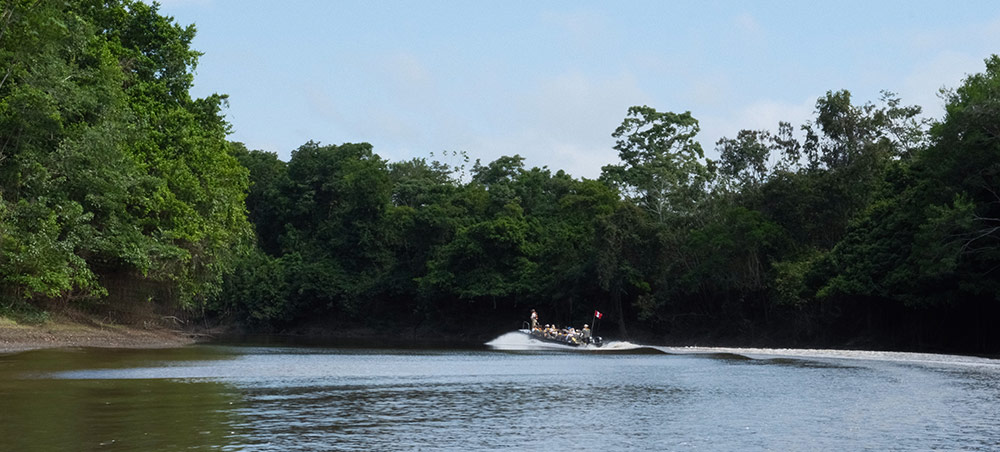
The Pacific does not send a weather front directly across South America. Instead, El Niño changes large scale patterns of wind and rising and sinking air throughout the tropics. These shifts can make rain clouds less likely to form over parts of the Amazon, raising the chance of below average rainfall and warmer conditions.
For example, the contrast within Peru helps show why the effects are not always intuitive. In some El Niño events, warm Pacific waters can contribute to heavy rain on Peru’s Pacific coast, while parts of the Amazon may tend towards drier conditions. The weather response depends on where the ocean is warmest, the time of year and other regional influences.
The Amazon is vast. Its weather is shaped by the Atlantic, regional winds, the Andes and the seasonal movement of the rainy season as well as the Pacific. El Niño helps explain broad patterns, but it cannot tell us exactly what conditions will be like in one place.
One rainforest, many seasons
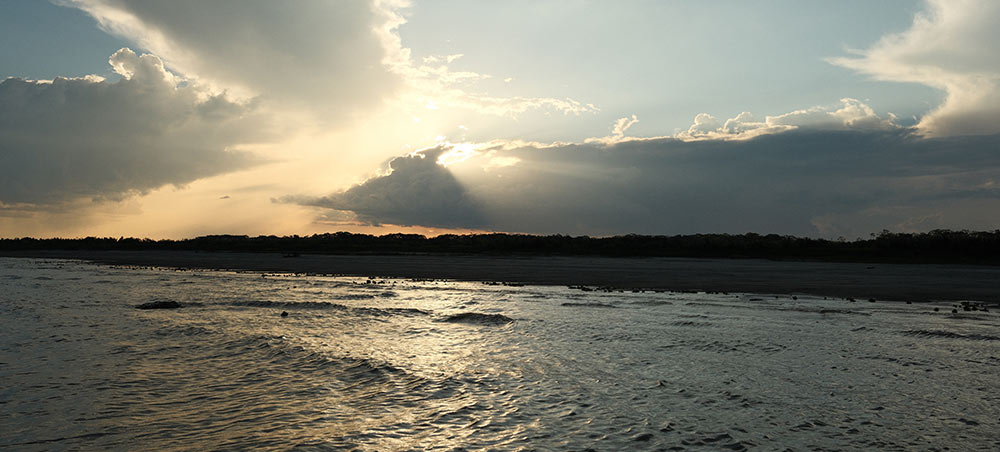
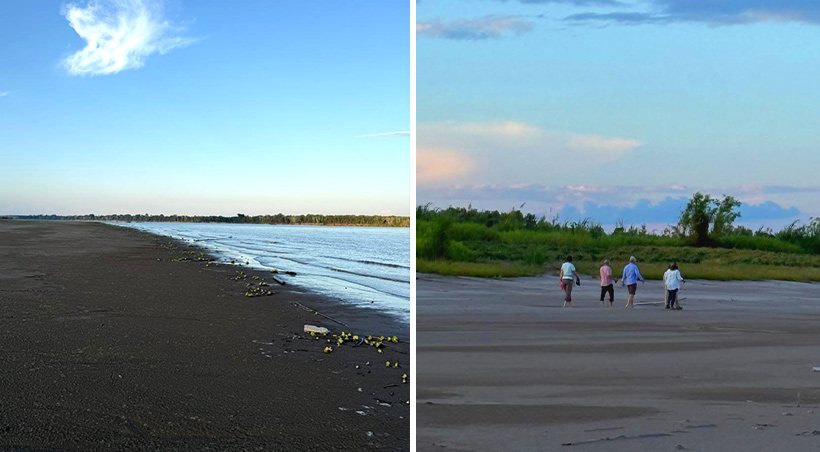
In Pacaya Samiria, changing water levels transform the landscape through the year. During the rising water season, the forest opens into flooded channels and waterways. As the water recedes, beaches appear and the forest floor becomes more accessible. Each season brings a different view of the reserve and a different way to explore it.
As a result, lower water reveals sandy beaches and stretches of firm ground, creating more opportunities for walks on land. Wildlife can become more concentrated along the channels, while birdlife offers a changing spectacle among the trees, waterways and exposed riverbanks.
These seasonal changes are part of the Amazon’s natural cycle. They shape where animals gather and which parts of the forest are easiest to explore. For visitors, the lower water season can bring a closer look at the landscape and its wildlife.
How Delfín travels with the river
The daily program may be adjusted as river and weather conditions change. Delfín’s team knows the waterways of Pacaya Samiria well. Our local naturalists have spent their lives in the reserve and bring a deep understanding of its wildlife, seasons and routes.
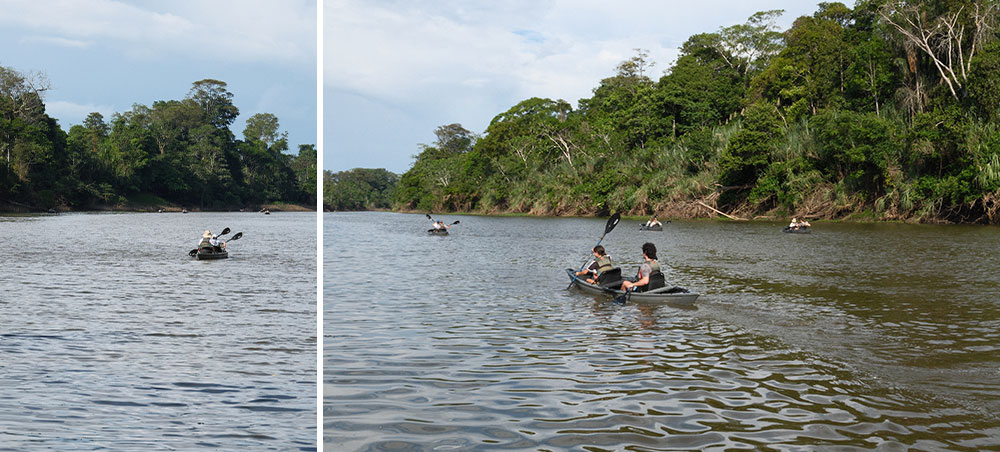
Our auxiliary skiffs and the naturalists’ knowledge of alternative waterways give the team flexibility to adapt the onboard program to the conditions. The aim is to keep the experience rich and varied, with opportunities to explore the forest, observe wildlife and enjoy the reserve from the water. The route or timing may change, while the naturalists help guests make the most of what the season is revealing.
One day, the skiff glides beneath the canopy of a flooded forest. Another, it reaches a quiet beach where the trees meet the open river. With Delfín’s naturalists knowing where to look, each season reveals a different side of Pacaya Samiria.
