

WHERE THE RIVER MEETS THE STARS

Stargazing in Pacaya Samiria reveals a night sky rarely seen with such clarity, reflected across the dark waters of the reserve.
Dusk moves quickly in the Peruvian Amazon. The heat eases, the canopy darkens and sounds muffled by the day begin to travel across the water. Soon, the first stars appear.
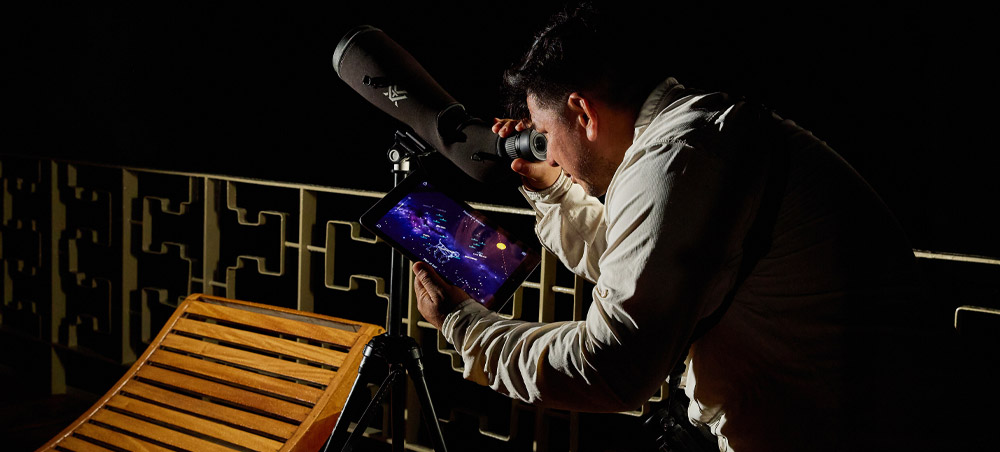
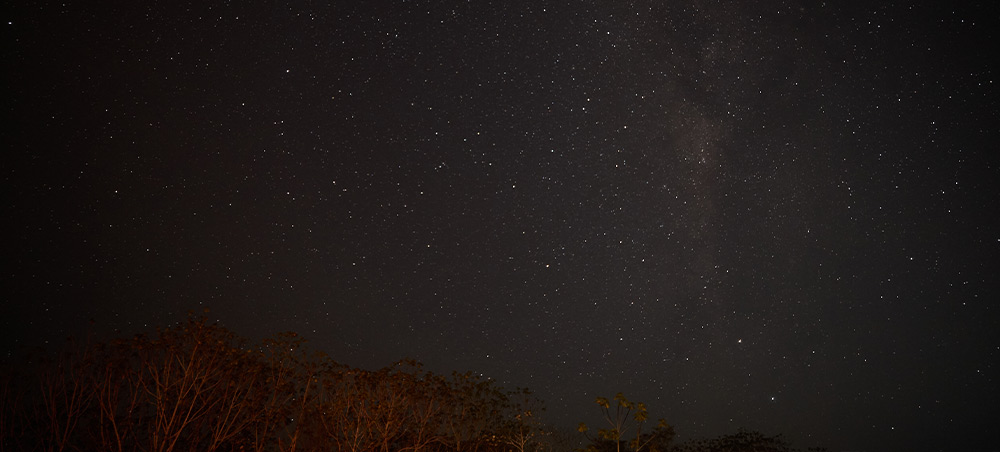
In Pacaya Samiria Reserve, in Peru’s Loreto region, distance from city lights gives the night sky an uncommon clarity. Constellations emerge above the forest as guests watch from the deck of a Delfín vessel. When the water is still, the same stars appear beneath them.
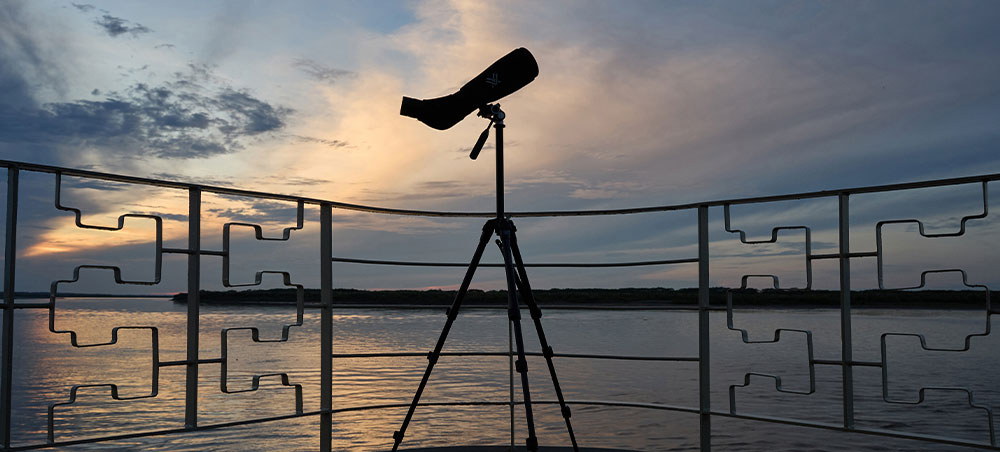
It is particularly beautiful along the Marañón and the reserve’s quieter tributaries. Look over the side of a boat and the boundary between sky and reflection becomes difficult to find. The river seems to hold the night.
Between Northern and Southern skies
Pacaya Samiria lies close to the Equator, offering a view of constellations associated with both hemispheres at different times of the year. Orion and the Southern Cross may each be visible from this part of the Amazon.
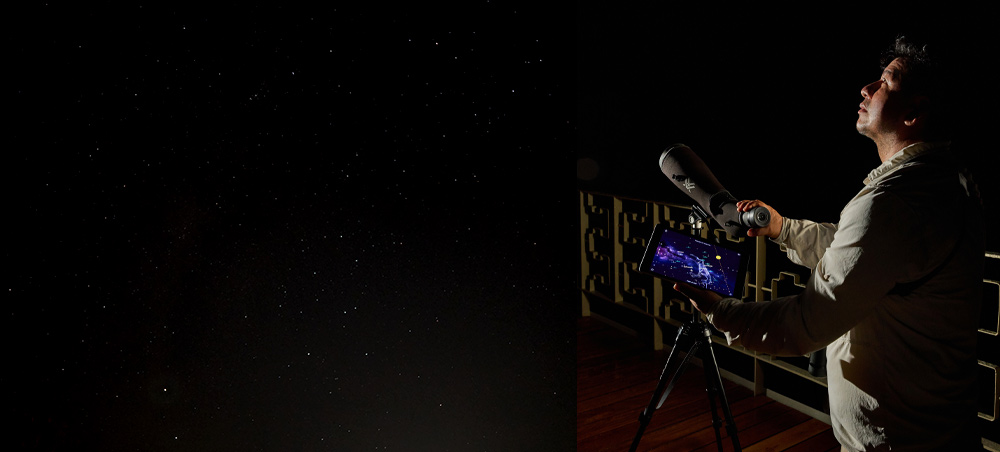
Latitude is only part of the reason the skies feel so generous. Far from urban light, the eyes gradually adjust and fainter stars come into view. Details reveal themselves slowly, rewarding anyone willing to sit still and look.
The water changes after sunset too. On calm evenings, its surface becomes almost perfectly reflective. It is easy to understand why Pacaya Samiria is known as the Jungle of Mirrors.
Water shapes daily life throughout the Amazon rainforest in Perú. The seasonal rise and fall of the rivers transforms the flooded forest, carries nutrients through the ecosystem and influences where animals feed or shelter. Rivers are also roads here, connecting communities across a region where travel has always followed the current.
Any understanding of Pacaya Samiria begins with its waterways. At night, the sky adds another layer to that story.
Knowledge written in the sky
Amazonian peoples were observing celestial patterns long before telescopes reached the region.
For the Kukama Kukamiria and other Indigenous peoples, the movements of the stars and Moon belong to a wider understanding of weather, seasons and river life. Celestial observations have helped communities anticipate environmental change and decide when to fish, plant, harvest or travel.
The Pleiades hold seasonal importance for many Indigenous cultures across South America, although their meanings differ between communities. The Southern Cross has also served as a point of orientation in the southern sky.
Such knowledge is rooted in place and gathered over generations. The return of a familiar star at a particular time of year may coincide with changing rainfall, rising water or shifts in animal behaviour. These relationships carry practical meaning in a landscape governed by seasonal rhythms.
They also offer visitors a more thoughtful way to encounter the Amazon. The sky is part of the ecosystem’s story and part of the cultural knowledge that has long made life here possible.
The forest by moonlight
Each phase of the Moon brings a different quality to the rainforest.
On brighter nights, the riverbanks and overhanging branches come into view. When the Moon is less present, the forest draws closer and the stars become more pronounced. Moonlight can also influence the movement and visibility of nocturnal animals, including the behaviour of predators and prey.
Riverine communities have long considered lunar cycles when fishing and travelling. Their understanding is precise, local and grounded in lived experience. Scientific research may study some of the same relationships through other methods; both depend on sustained observation.
A traveller catches only a glimpse of these patterns. Still, an evening on the water can alter one’s sense of the Perú Amazon rainforest. Small details acquire new weight: water brushing against the hull, an unseen creature calling from the trees, a sudden movement at the river’s edge.
The darkness encourages patience. There is less to distract the eye and more reason to listen.
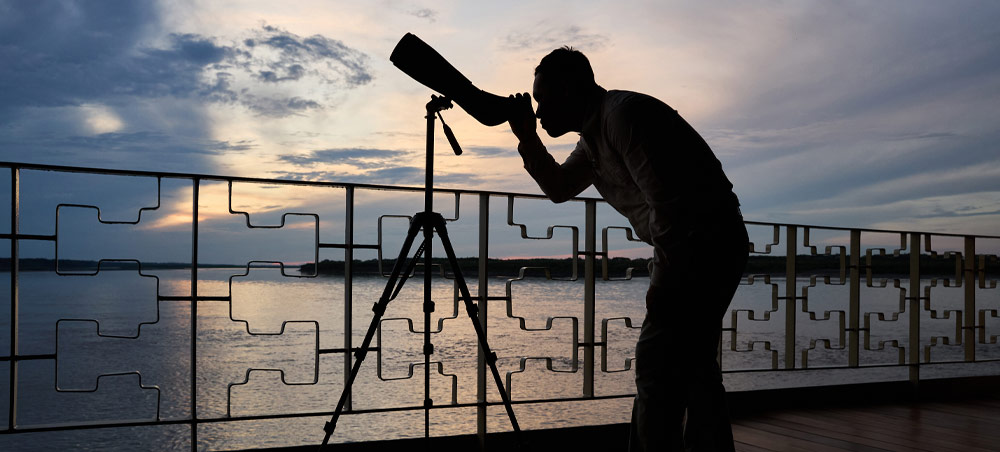
Pacaya Samiria after dark
Evenings aboard a Delfín vessel unfold at the pace of the river. The engine quiets and conversation softens. Guests may remain on deck or set out with a naturalist guide to explore the waterways after sunset.
Wildlife sometimes appears along the banks, though the value of the experience is not measured by the number of sightings. There is pleasure in being present in a place with almost no artificial light and having the time to let the senses adjust.
This unhurried attention is part of an Amazon River expedition. It brings a deeper appreciation of the reserve and of the people whose knowledge has been formed through daily contact with it.
In this setting, luxury feels less concerned with excess. Comfort and attentive service matter, but so do time, access and the quality of the encounter. The privilege lies in entering a remote landscape carefully, guided by people who understand it, and leaving its rhythms undisturbed.
Thoughtful travel also asks something of us in return. It asks us to notice who holds knowledge, to respect the limits of a sensitive ecosystem and to remember that this landscape is home before it is a destination.
Pacaya Samiria rewards that attention. At night, the forest’s scale is felt differently. The canopy forms a dark line against the sky as the river carries the stars beneath the boat.
For many guests, these quiet hours become a lasting memory of an Amazon river cruise in Perú: the vessel resting on dark water, the forest close on either side and an unobstructed sky overhead.
In Pacaya Samiria, looking up is enough.