


The Amazon according to Walter Wust
A journey with a special guest aboard Delfín
Some journeys cannot be understood right away.
The Amazon is one of them.
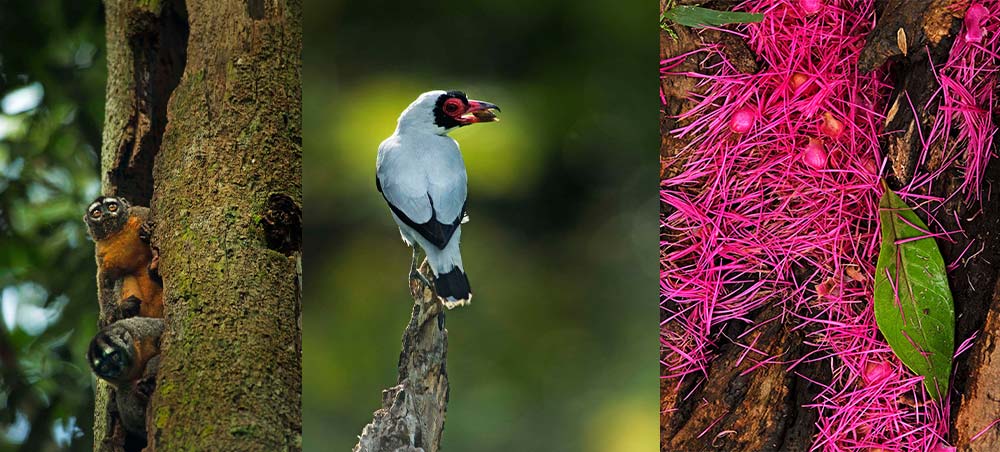
At first, everything feels too vast. Too green, too humid, too alive. The river moves with a deceptive calm. The forest seems quiet and then, suddenly, something happens: a bird crosses the light, a monkey moves through the branches, a dolphin breaks the surface, a leaf reveals an insect that seemed to be part of the tree.
In the Amazon, learning to look takes time.
On October 27, Delfín will welcome Walter H. Wust aboard for a journey through the Peruvian Amazon. This Amazon River cruise follows Delfín’s regular itinerary, with one meaningful addition: Walter’s presence as a special guest. During the program, he will offer an onboard lecture and share informal guidance with guests on nature photography, wildlife observation, light, patience and the art of truly seeing the Amazon rainforest.
Walter H. Wust is a photographer, naturalist, editor and one of Peru’s great visual interpreters. He has spent much of his life exploring and documenting the country’s biodiversity, from birds and forests to the fragile ecosystems that make Peru one of the richest natural territories on Earth.
The itinerary remains the same. What changes is the way guests will be invited to experience it.
“Every journey with Delfín is special,” says Walter. “A combination of nature, adventure and sophistication that stays forever in our memories. The Amazon always surprises. Every trip offers unique experiences and encounters, no matter how many times we have visited.”
That sense of surprise is part of the journey.
Walter does not look at the forest as someone searching for a postcard.
He looks at it as someone who knows how to wait.
Learning to look in the Peruvian Amazon
For Walter, photographing the Amazon is not only about having a good camera. It is about understanding the rhythm of the place. Accepting that wildlife does not always appear when we want it to. Learning that, in the tropical forest, almost everything has evolved to remain hidden. Knowing that a powerful image is not always the closest one, but the one that tells a story.
“More than sophisticated equipment, to photograph the Amazon you need patience and knowledge,” he says.
This is not a small observation. It changes the way one enters the forest.
The Amazon is not the African savannah. Animals do not stand in open grasslands waiting to be seen. Here, life is layered, camouflaged, suspended, reflected, hidden in sound before it becomes visible. The traveler who arrives expecting spectacle may miss what is truly extraordinary. The traveler who learns to wait begins to see.
Walter’s way of looking comes from both science and art. His training as a biologist and forestry engineer gave him a deep understanding of tropical nature. Years spent alongside experts in the field sharpened what he describes as “an acute eye and a special sensitivity for details.”
Those details matter.
A branch that moves against the wind. A shape in the canopy. The texture of bark. The behavior of an animal before it disappears. A sudden change in light over the river. In the Amazon, the image is often there before the traveler knows how to recognize it.
Walter summarizes the spirit of the journey in a few words: “Discovery and enjoyment in the details, in every part of the trip.”
That may be the best way to enter the Peruvian Amazon.
Not by trying to see everything.
But by learning how to notice.

Nature proposes and light disposes
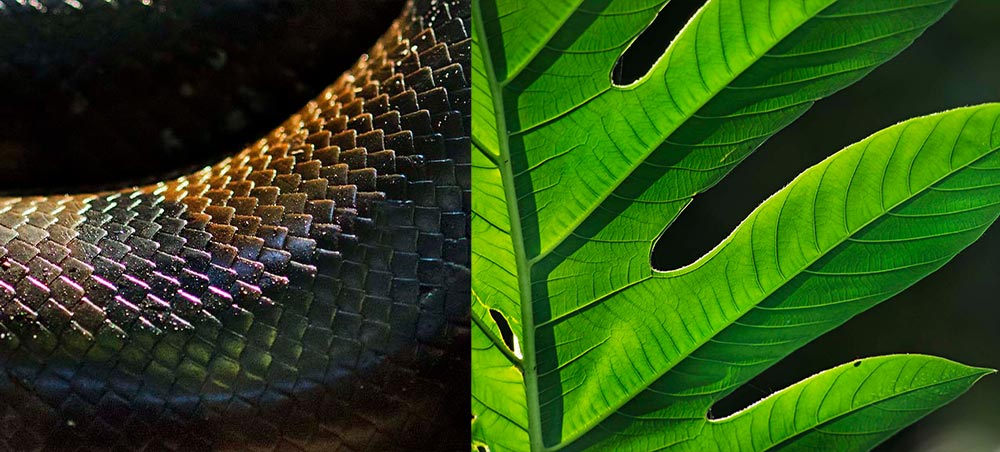
“Nature proposes and light disposes,” says Walter.
The phrase captures a way of being in the landscape. You can prepare, study, choose the right equipment and leave early. But the Amazon has its own timing. Patience, more than speed, is the true tool of the photographer.
Mornings and late afternoons, he explains, are privileged moments. Warm light touches the river, gives depth to the forest and reveals what at other hours remains flat or hidden.
“Mornings and afternoons are always special because of the magical light that paints everything with warmth and almost surreal relief,” he says. “Those are the special moments to explore the forest.”
Anyone who has traveled through the Amazon rainforest in Peru knows how quickly the light changes. Mist rises from the water. Reflections shift. A grey sky suddenly opens. A dark branch becomes a silhouette. The same place can feel entirely different within minutes.
But Walter is not interested only in perfect light.
He also understands the difficult hours. The white sky, the reflections on the water, the deep shade beneath the canopy. The moments when many travelers put the camera away. For him, those conditions are not failures. They are part of the Amazon’s language.
“Do not fear radical or dramatic light,” he says. “Often, it gives us spectacular images when approached with creativity.”
His approach to composition follows the same idea. The river, the forest and the wildlife should not be treated as decoration. They are not backdrops. They are the story itself.
“The river, like the forest and wildlife, should be the excuse for the image to tell a story,” he says.
That is why his photographs rarely feel like trophies. They do not simply announce that something was seen. They ask what was happening, what surrounded it, what kind of world the image belongs to.
Wildlife photography beyond the checklist
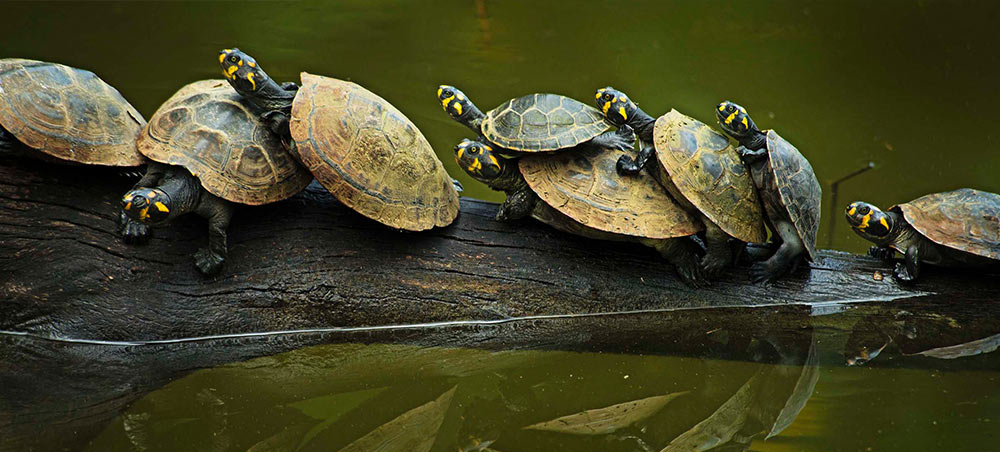
A luxury Amazon cruise offers rare access to one of the most biodiverse regions on the planet. But access alone is not enough. The Amazon asks for another kind of attention.
The temptation is to arrive with a list: birds, primates, pink river dolphins, insects, reptiles, reflections, sunsets. There is nothing wrong with wanting to see as much as possible. Wonder often begins with desire. But Walter invites travelers to move beyond the checklist.
In wildlife photography, he believes context matters as much as proximity.
“Wildlife photography stopped being a documentary record long ago,” he says. “To create impact, it needs singularity and context. An image that shows a complete scene is always better than a close-up.”
This is one of the most important lessons for photographing the Amazon.
The instinct is often to zoom in. To isolate the bird, the monkey, the dolphin, the insect as proof. But the Amazon resists that kind of extraction. It asks for relationship. It asks for the animal and its world, the river and its light, the forest and its density, the encounter and its atmosphere.
A close-up may identify a species.
A wider image may reveal the life around it.
For guests aboard Delfín, this distinction can change the way each excursion is experienced. A skiff ride is not only a search for wildlife. It is a chance to observe behavior, light, silence, scale and the constant exchange between water and forest.
The Amazon is not only what appears.
It is also what almost disappears.
Conservation begins with admiration
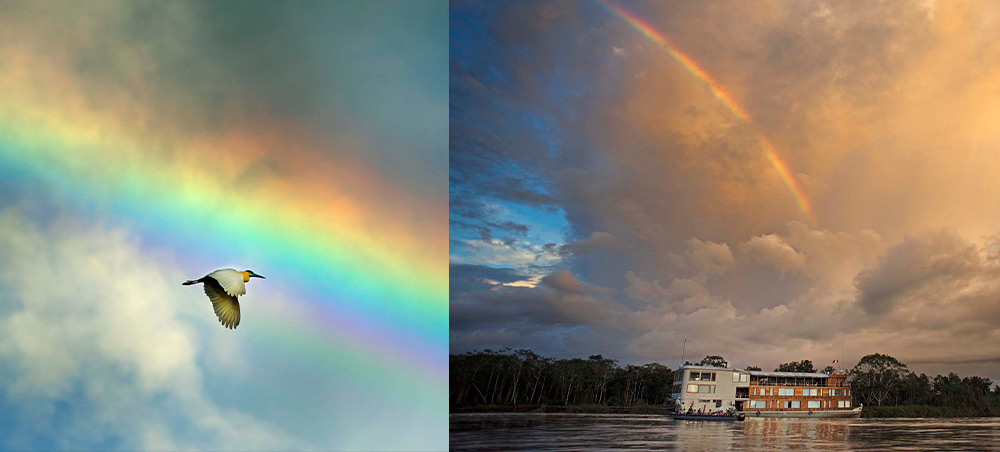
Walter’s eye comes from photography, but also from conservation.
“The desire to inspire through art, so that people take action toward the conservation of nature, has always been behind my work,” he says. “No one protects what they do not admire.”
That sentence carries the spirit of this journey.
Learning to look at the Amazon is not only an aesthetic exercise. It is also a way of understanding its fragility. The beauty of the river, the birds, the primates, the insects, the communities and the flooded forests belongs to an ecosystem that is delicate, formidable and profoundly alive.
Walter is moved by what still remains possible.
“I am moved and excited to see that, despite the enormous impact we as humans have had on the Amazon, there is still so much to rescue through conservation initiatives, ancestral wisdom and sustainable enterprises,” he says.
This is where the journey aboard Delfín becomes more than a passage through the landscape. It becomes a way of participating in a different relationship with it. One built on attention, admiration and respect.
For travelers seeking an Amazon River cruise in Peru, the experience is not only about where the vessel goes. It is about how the place is approached. The Amazon is not scenery. It is a living system. It is home to species, communities, rivers, knowledge and memories far older than the journey itself.
To admire it well is already to begin caring for it.
The ethics of photographing the Amazon
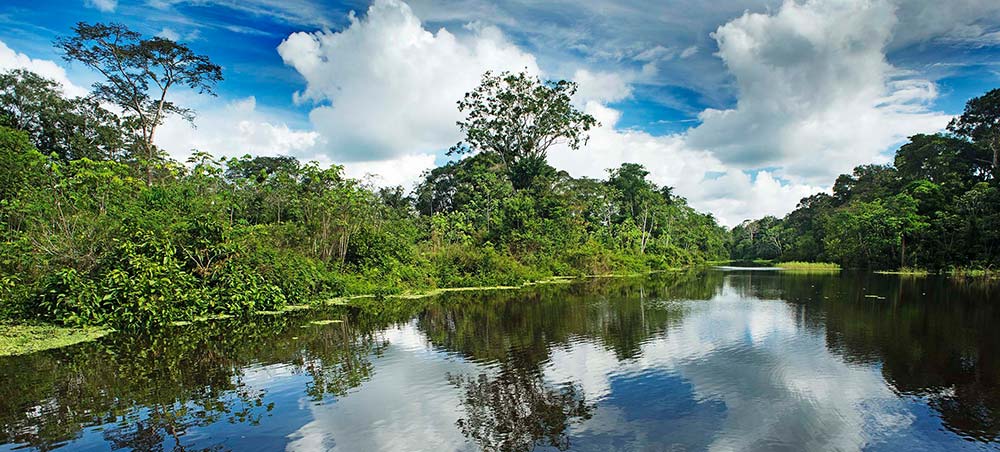
During the October 27 departure, guests will be invited to approach the Amazon from Walter’s perspective. Not as a checklist of species, but as a living territory that asks for patience.
Walter is very clear about what respect means in nature photography: distance, silence, not intervening, not chasing the shot.
“Photography almost always reveals when an animal has been pursued,” he says. “Patience and respect give us images that express harmony and intimacy, and that is a great value in wildlife photography.”
The same applies when photographing people and culture. The Amazon is not only a landscape. It is also home, memory, knowledge and community. Walter’s approach is simple and precise: never force an image.
“Cordiality and respect always open the doors to a beautiful image,” he says, “one that reveals complicity, not discomfort.”
That distinction matters.
A photograph can take, or it can honor. It can flatten a place into an exotic scene, or it can show the dignity of an encounter. In the Amazon, the difference is felt immediately.
For guests, this may be one of the most valuable parts of traveling with Walter aboard Delfín. His guidance is not only technical. It is ethical. It asks travelers to consider not only what they photograph, but how they relate to what is in front of them.
What to bring, and what to leave behind
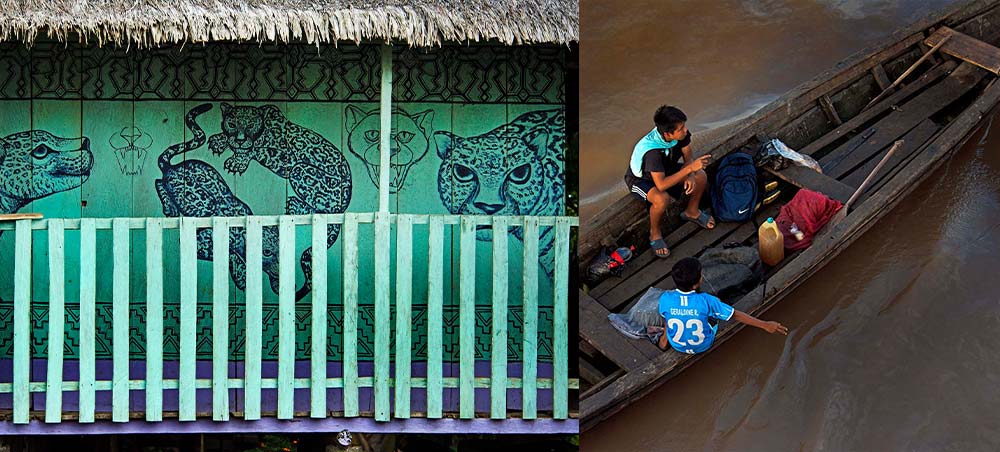
This journey is ideal for travelers who love photography, but it is not only for photographers. It is for anyone who wants to see more deeply.
You do not need to be a professional. You do not need to travel with heavy equipment. A camera, a phone, a pair of binoculars or simple curiosity can be enough.
Walter is almost disarmingly practical about this. If he had to bring only three things, he says, he would choose “binoculars, a camera and a portrait lens.”
His reason is revealing: “The best images I have taken, I have achieved with binoculars.”
Because before the photograph comes the sighting.
Before the image comes the act of noticing.
For those using a phone, his advice is equally generous.
“Images are for sharing,” he says. “It does not matter how we obtain them. The use of a professional camera or a mobile phone depends on the final use we want to give the images.”
Then comes the essential part: “The camera should be an extension of the photographer, never something that creates discomfort or separates us from the environment.”
For guests interested in Amazon rainforest photography, Walter’s presence offers a rare opportunity to ask practical questions in real time. How do you photograph from a moving skiff? What do you do with reflections on the river? How do you work with low light beneath the forest canopy? When is it better to wait instead of shooting? How do you photograph wildlife without disturbing it?
These questions are not abstract in the Amazon.
They happen in the moment.
On the water. On the trail. At sunrise. At dusk. When something appears and disappears before you are ready.
Pacaya Samiria and the privilege of place
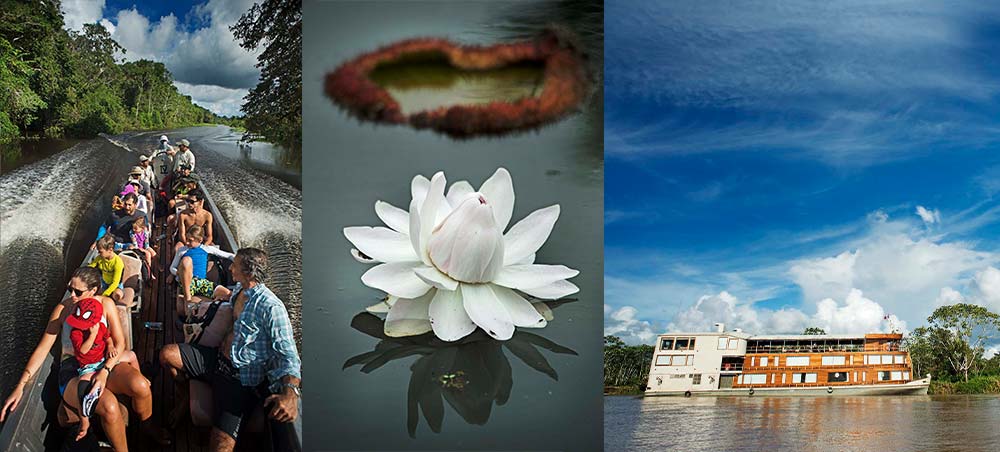
When asked for his tips on photographing the Amazon, Walter begins with location.
“It is worth investing time and resources in visiting the best places in the Amazon,” he says. “Pacaya Samiria is, without a doubt, one of those places.”
The Peruvian Amazon is one of the most extraordinary territories for nature travel in South America, and Pacaya Samiria is among its great sanctuaries. Its flooded forests, rivers, lakes and wildlife offer the kind of setting that rewards patience and attention.
Walter also speaks of timing.
“Take advantage of the extreme lights that mornings and afternoons offer,” he says. “Warm light and indigo blue are incomparable gifts that create powerful and inspiring images.”
Then comes patience.
“Quality before quantity,” he says. “Focus on the details and capture their essence.”
These tips are simple, but they are not superficial. They come from years in the field. They also translate beautifully into the way Delfín guests experience the river: slowly, closely, and with enough comfort to let the wilderness unfold without haste.
Aboard Delfín, the Amazon is not rushed. Days move between skiff excursions, forest walks, quiet moments on deck, meals, conversations and the changing life of the river. The experience is continuous. Morning light, afternoon reflections, the sound of the forest after dark, the strange intimacy of traveling through such a vast place by water.
Walter’s presence gives that rhythm another layer.
A different way to return home
What should travelers take with them at the end of the journey?
Walter’s answer is not only about photographs.
He hopes they leave with “memories that last a lifetime,” and with “a commitment to the conservation of the Amazon.” He also hopes they understand that this beautiful and formidable place is a fragile ecosystem that must be used with respect.
That may be the real purpose of this departure.
Not simply to produce better images, although guests may certainly return with them.
Not simply to learn more about nature, although Walter’s knowledge will make the forest richer and more legible.
The deeper invitation is to return with a changed eye.
Rather than seeing the Amazon as a remote wilderness, travelers begin to recognize it as a living presence. They discover that beauty and fragility are often inseparable. Admiration becomes more than a feeling; it grows into attention, respect and, ultimately, care.
With Walter Wust aboard, Delfín’s October 27 departure becomes an invitation to travel differently. Guests learn to listen before looking, wait before photographing and appreciate that the Amazon is not a destination to be consumed in a hurry.
It is a place that changes the way we see.
And, perhaps, the way we remember.
TRAVEL WITH WALTER WUST ABOARD
Delfín departure: October 27
Special guest: Walter H. Wust
Includes an onboard lecture and interaction with guests throughout the program.
For reservations and availability, please contact our team.
June 26, 2026